Lead Generation
What Is B2B Lead Generation? A Complete Guide for 2026
Last Updated: August 11, 2026 | Editorial Team
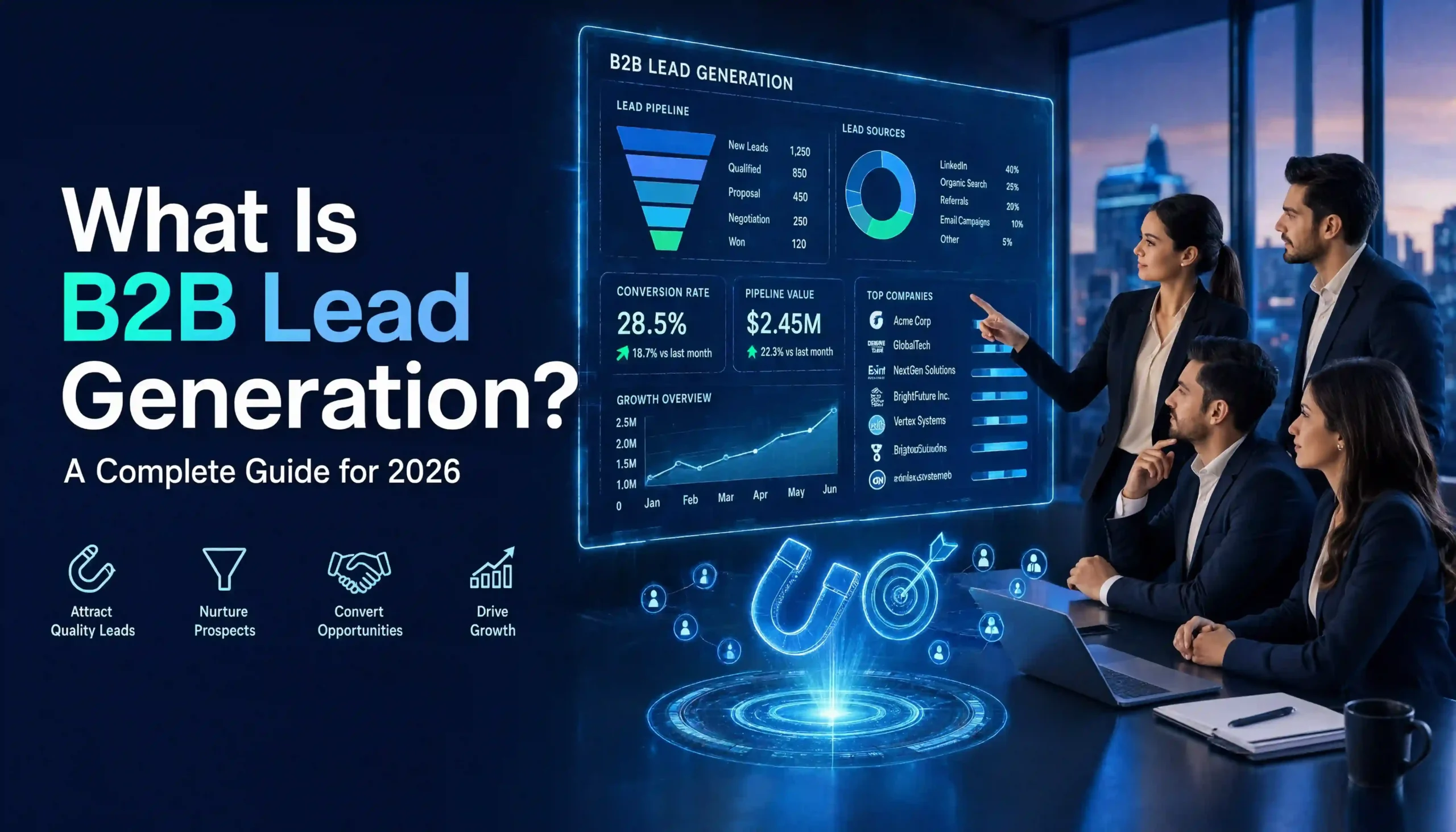
B2B lead generation is the process of identifying, attracting, and qualifying potential business customers so a sales team can turn them into paying clients. Instead of waiting for buyers to find you, it’s the set of strategies and channels – email outreach, cold calling, LinkedIn, content, paid ads, and account-based marketing – that put your company in front of the right decision-makers before they’ve started actively shopping.
That’s the short answer. The rest of this guide covers how the process works, the difference between a lead and a qualified lead, the channels that make up a real lead generation program, and how to know if yours is working.
Why B2B Lead Generation Is Different From B2C
The B2B Lead Generation Process, Step by Step
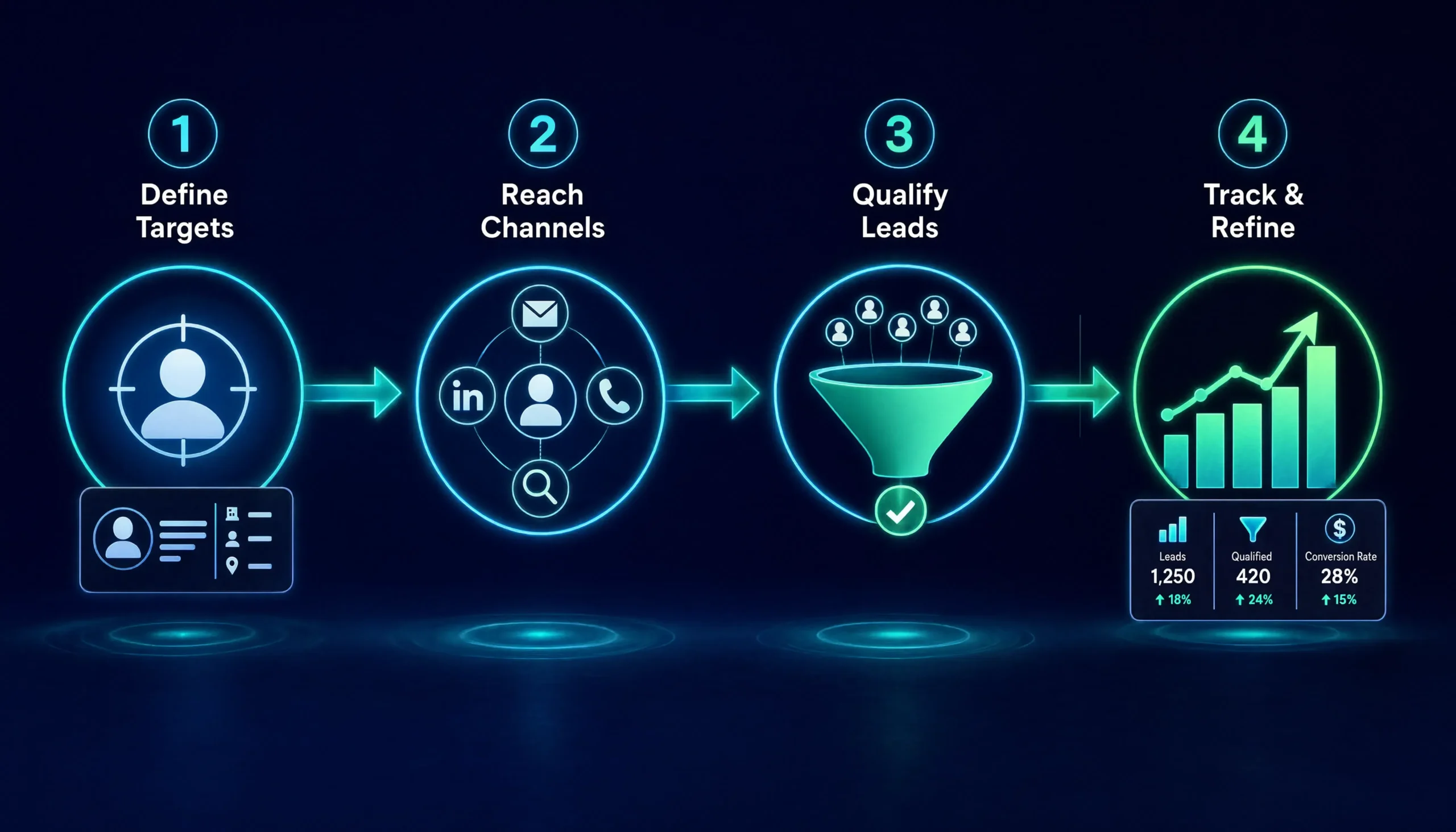
A working lead generation program generally moves through four stages:
1. Define who you're targeting.
Before any outreach happens, you need a clear picture of your ideal customer profile (company size, industry, tech stack, buying triggers) and the specific personas within that company who influence the decision. Skipping this step is the most common reason lead gen campaigns underperform – you can have a great outreach sequence and still fail if it’s going to the wrong companies.
2. Reach them through the right channels.
No single channel works for every industry or every buyer. Cold email, cold calling, LinkedIn outreach, content syndication, paid search, and account-based marketing each have strengths – and most effective programs run several in parallel rather than betting on one.
3. Qualify before handing off to sales.
Not every response is a real opportunity. Qualification frameworks like MQL/SQL or BANT exist to filter out leads that technically responded but aren’t a genuine fit or aren’t ready to buy – so sales time goes to conversations that are worth having.
4. Track, report, and refine.
Cost per lead, cost per qualified lead, conversion rate by channel, and pipeline contribution are what separate a lead gen program you can defend in a budget conversation from one that’s just generating activity.
The Main B2B Lead Generation Channels
- Cold email – scalable, measurable, and still one of the highest-ROI channels when done with proper personalization and deliverability practices.
- Cold calling / telemarketing – still effective for reaching decision-makers directly, particularly in industries where buyers expect a human conversation before evaluating a vendor.
- LinkedIn and social outreach – strong for reaching buyers where they’re already professionally active, especially in B2B software and services.
- Account-based marketing (ABM) – a targeted approach for larger deals with multiple stakeholders, where a handful of high-value accounts get a coordinated, multi-channel campaign instead of broad outreach.
- Content syndication – distributing gated content (guides, reports, tools) through partner networks to capture intent-driven leads who are already researching a problem you solve.
- Paid and organic search – capturing demand from buyers who are already searching for a solution, rather than reaching out cold.
Most mature programs don’t pick one of these – they combine two or three based on deal size, sales cycle, and how their specific buyers prefer to be reached.
How to Know If Your Lead Generation Is Working
A handful of metrics tell you most of what you need to know:
- Cost per lead (CPL) – what you’re spending to generate one lead, by channel
- Cost per qualified lead (CPQL) – a more honest number, since it filters out leads that never had a real chance of closing
- Lead-to-opportunity conversion rate – how many leads become sales conversations
- Pipeline and revenue contribution – the number that ultimately matters to leadership
If you’re only tracking lead volume, you’re missing the numbers that predict revenue.
Building vs. Outsourcing Your Lead Generation
Some companies build lead generation in-house with a dedicated SDR team; others outsource to a specialized partner. Neither is universally right – it depends on team size, how fast you need to scale, and whether you have the internal expertise to run multi-channel outreach well. It’s worth thinking through deliberately rather than defaulting to whichever option feels more familiar.
FAQs
Lead generation focuses on identifying and capturing specific, actionable leads – names, companies, and contact details a sales team can follow up with. Demand generation is broader: it’s about building awareness and interest in your category so that when buyers are ready, they already know who you are. Most B2B companies need both working together.
It varies significantly by industry and channel, but the number that matters most isn’t raw conversion rate – it’s cost per qualified lead relative to your deal size and sales cycle.
Channels like cold email and calling can produce early signals within weeks, but a program typically needs a full sales cycle – often two to six months in B2B – before you can judge it on pipeline and closed revenue rather than just activity.
Yes – smaller buying committees, shorter sales cycles, and tighter budgets usually mean a leaner channel mix and faster iteration, rather than the larger, more coordinated campaigns that make sense for enterprise deals.
Right Pace Techmedia Editorial Team
Right Pace Techmedia editorial team comprises B2B growth specialists and campaign strategists with over 7 years of hands-on experience delivering measurable pipeline results for globally recognized technology brands including Oracle, SAP, Salesforce, Siemens, and Lenovo. Having engineered over 1.8 million verified leads across lead generation, account-based marketing, data intelligence, and demand generation programs, our writers draw from real campaign outcomes not borrowed theory. Every article published on this blog reflects practitioner-level knowledge, reviewed by senior professionals who have managed complex B2B campaigns across industries, geographies, and buying committee structures. We write what we know because we’ve lived it.


