Lead Generation
ICP and Buyer Persona Development: A Practical Framework for B2B Teams
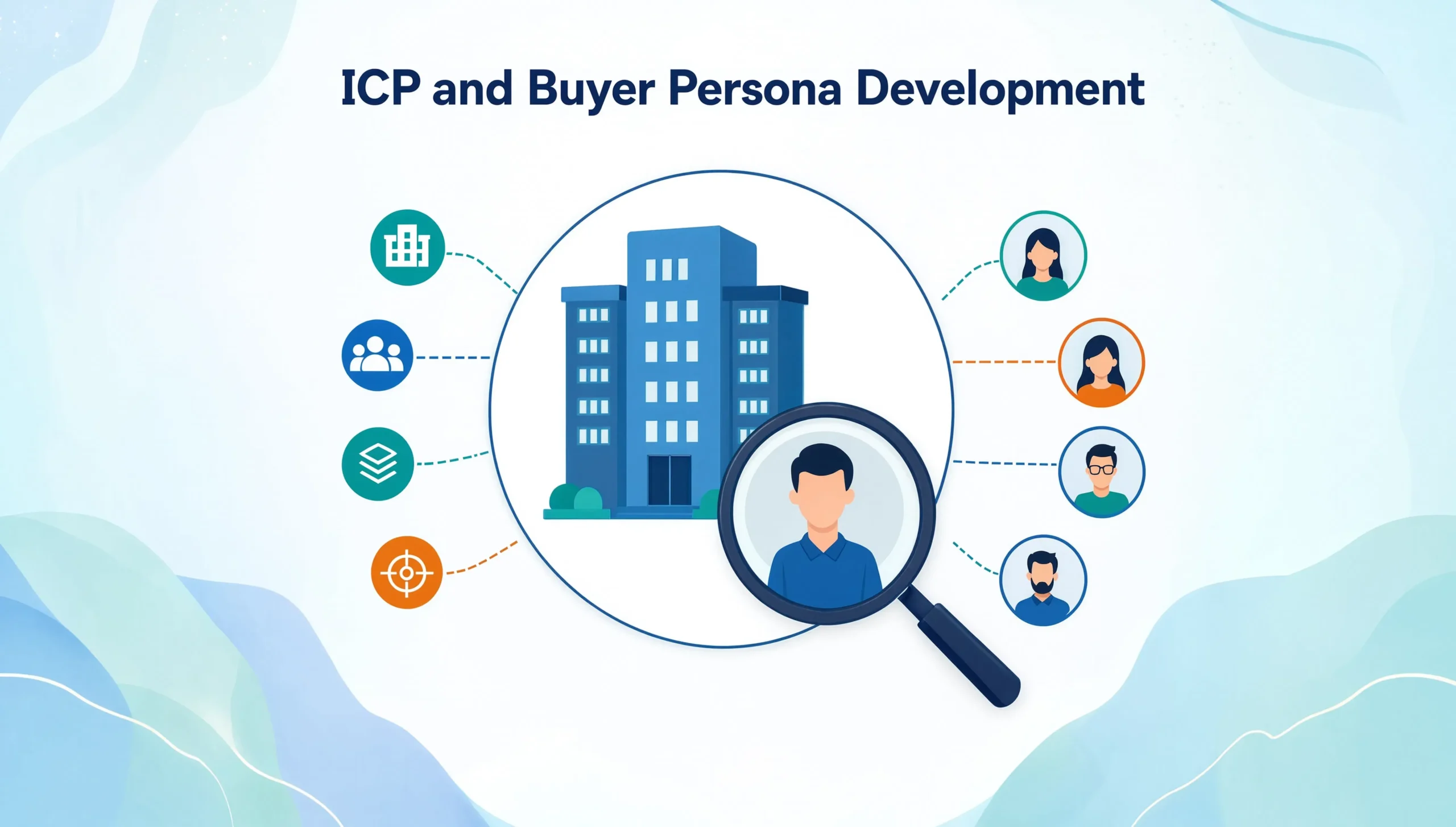
An ideal customer profile (ICP) describes the type of company most likely to buy from you and succeed as a customer – industry, size, tech stack, and buying triggers. A buyer persona goes one level deeper: it describes the individual people inside that company who influence or make the purchase decision. Together, they’re the foundation every other part of a B2B lead generation program is built on. Get them wrong, and even a well-run outreach campaign ends up reaching the wrong companies and the wrong people inside them.
Most teams think they have an ICP. Far fewer have one that’s specific enough to change who gets targeted. This guide walks through a practical framework for building both – and how to keep them from going stale.
Why ICP Comes Before Everything Else
Every downstream decision in lead generation depends on the ICP being right first. Your messaging, the channels you invest in, the qualification bar you set, even the case studies you lead with in outreach – all of it should trace back to a clear picture of who you’re targeting and why.
Skip this step, or define it too loosely (“mid-market SaaS companies”), and the symptoms show up later where they’re much more expensive to fix: high lead volume with low conversion, sales complaining that “these leads aren’t a fit,” and a CAC that keeps climbing because you’re spending to reach people who were never going to buy.
Building the Ideal Customer Profile
A usable ICP is specific enough that someone unfamiliar with your business could look at a company and say yes or no. That means going beyond firmographics into the signals that predict fit.
Start with your best current customers. Look at the accounts with the shortest sales cycles, the highest retention, and the best expansion revenue. What do they have in common? This is a stronger starting point than guessing from scratch.
Layer in firmographic criteria:
- Industry and sub-vertical
- Company size (employee count and/or revenue)
- Geography
- Growth stage (funded startup vs. established enterprise)
Add technographic and intent signals:
- What tools or platforms do they already use (complementary or competitive)?
- Are there hiring patterns, funding events, or expansion signals that indicate they’re a good-fit account right now, not just in theory?
Define disqualifiers, not just qualifiers. A strong ICP is as much about who to exclude as who to include. If certain company sizes or industries consistently churn or never close, write that down explicitly – it saves outreach budget and sales time later.
Building Buyer Personas Within the ICP
Once you know which companies to target, the next question is who inside those companies matters. In B2B, that’s rarely one person.
For each persona, define:
- Role and where they sit in the buying process – economic buyer, technical evaluator, end user, or procurement/legal gatekeeper
- What they’re measured on – their own KPIs, not your product’s features, since that’s what motivates them to act
- Where they get information – LinkedIn, industry publications, peer communities, analyst reports
- What objections they’re likely to raise, based on their role (a technical evaluator and a budget owner will push back on completely different things)
A useful test: if your persona description could apply equally to someone at a totally different type of company, it’s still too generic.
Keeping ICP and Personas from Going Stale
This isn’t a one-time exercise. Markets shift, your product changes, and the customers who were a great fit two years ago may not be anymore. Revisit the ICP on a regular cadence – most teams find quarterly or twice-yearly reviews strike the right balance – and update it whenever you notice a pattern in the deals that are closing easily versus the ones that stall or churn.
Personalizing ABM Campaigns with Technographic Insights
A sharp ICP and persona set is what makes every other part of a lead generation program work harder. It’s what a qualification framework filters against, what a multi-channel strategy is built around, and what makes account-based marketing worth the extra investment for your highest-value accounts.
This is also where a lot of teams hit a practical wall – not because the framework is unclear, but because building and maintaining accurate, verified data behind an ICP (firmographic records, technographic signals, intent data) is genuinely time-consuming to do well in-house. It’s one of the reasons Right Pace TechMedia built dedicated data solutions around exactly this problem: enriching and verifying account and contact data so an ICP isn’t just a strategy document, but something a sales and marketing team can actually target against with confidence. If building or refining an ICP has stalled on data quality rather than strategy, that’s a conversation worth having with a partner who does this full-time rather than trying to solve it from scratch.
FAQs
What's the difference between an ICP and a buyer persona?
An ICP describes the company you’re targeting – industry, size, tech stack. A buyer persona describes the individual people inside that company who influence or make the purchase decision. You need both: the ICP tells you where to look, personas tell you who to talk to once you’re there.
How many buyer personas should a B2B company have?
Most B2B companies need somewhere between two and five core personas, covering the main roles in the buying committee – typically an economic buyer, a technical evaluator, and an end user, at minimum. More than that tends to dilute focus rather than add precision.
How often should you update your ICP?
Quarterly to twice a year for most B2B companies, plus an immediate review any time you notice a pattern shift in which deals are closing easily versus stalling or churning.
Can a company have more than one ICP?
Yes – many B2B companies serve more than one distinct market segment (for example, different ICPs for SMB versus enterprise, or for different verticals). Each should have its own profile and, often, its own messaging and channel mix, rather than trying to force one generic profile to cover both.
Our Latest Bolgs

ICP Buyer Persona Development Framework
Lead Generation ICP and Buyer Persona Development: A Practical Framework for B2B Teams An ideal customer profile (ICP) describes the type of

What Is B2B Lead Generation? A Complete Guide
Lead Generation What Is B2B Lead Generation? A Complete Guide for 2026 Last Updated: August 11, 2026 | Editorial Team B2B lead

Data Cleansing vs Data Enrichment
Data Cleansing & Verification Why Data Enrichment Fails Without Clean CRM Data Last Updated: July 21, 2026 | Editorial Team Quick answer: