Lead Generation
Why SaaS Companies Struggle With Lead Generation in 2026
Last Updated: September 22, 2026 | Editorial Team
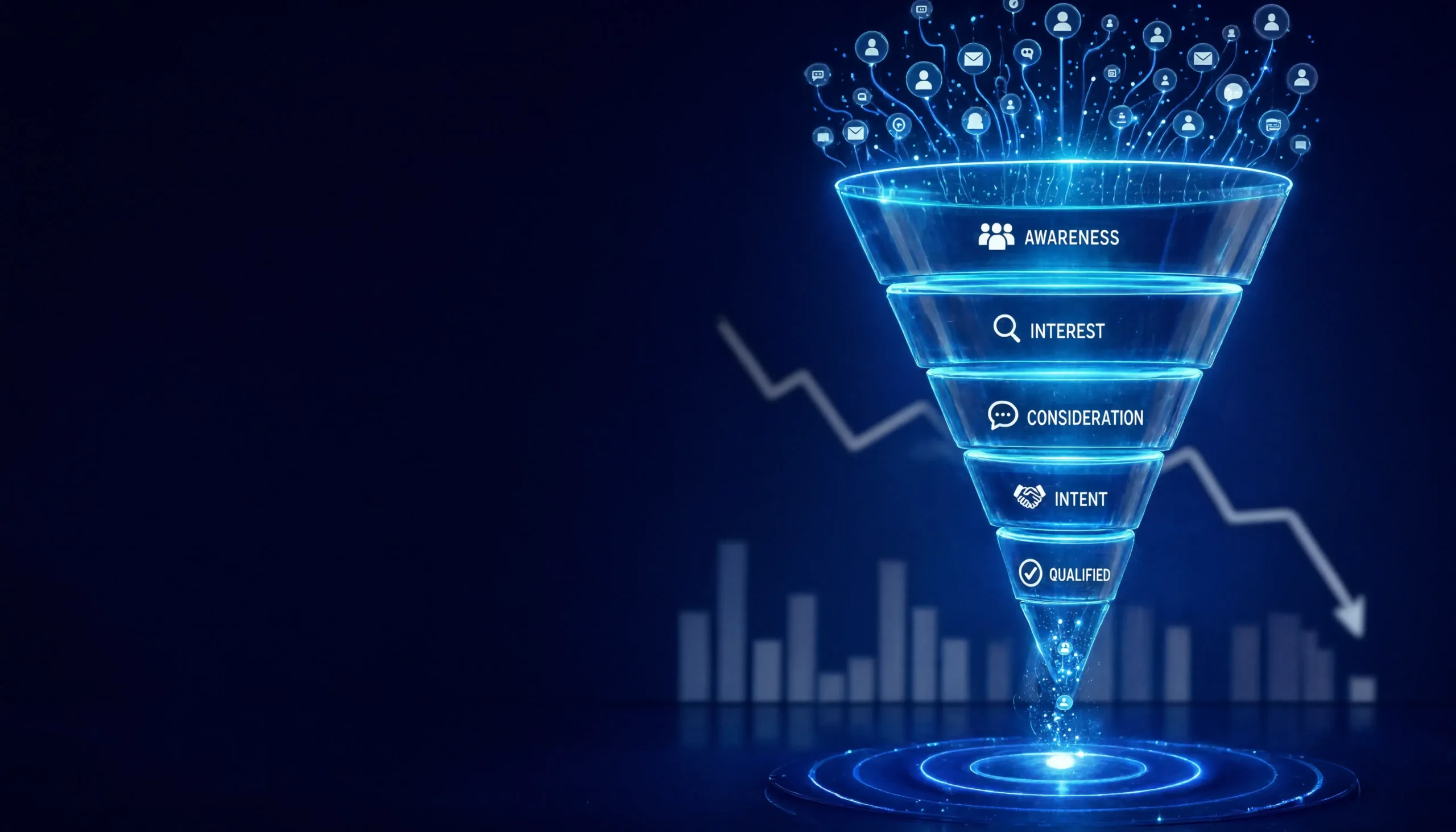
B2B SaaS lead generation is failing because buyers now research, shortlist, and pre-qualify vendors largely on their own, often avoiding sales reps until very late in the process, while most SaaS lead gen programs are still built around gated content and rep-first follow-up. That mismatch means teams are optimizing for a buying process that no longer exists. The result is high lead volume, low deal quality, and pipeline that looks healthy on a dashboard but doesn’t close.
Key Takeaways
- Most B2B buyers now prefer to avoid sales reps for as long as possible during their purchase research.
- Nearly half of B2B buyers used AI tools during a recent purchase, and buyers who felt confident in their research were far more likely to report a high-quality deal.
- The average B2B buying group now includes more than a dozen internal stakeholders and several external influencers, including procurement, which is often involved from the very start.
- Most B2B buyers who use AI during their purchase journey still fact-check its answers before trusting them.
- Analyst report usage has dropped sharply since 2022, while product reviews and free trials have become primary trust signals.
- Gated PDFs and generic MQL scoring were built for a research process buyers have largely abandoned, which is why they now produce volume without quality.
Why Are B2B Buyers Avoiding Sales Reps in 2026?
Most B2B buyers actively prefer a purchase process with little or no direct contact with a sales rep until they’ve done their own research. Gartner’s March 2026 survey of 646 B2B buyers found that 67% favour a rep-free buying experience for as much of the process as possible.
This isn’t buyers being difficult. It’s a rational response to how much information is now available without ever picking up a phone or booking a demo call. Product documentation, peer reviews, community forums, and AI research tools give buyers a way to answer most of their early questions on their own terms and their own timeline.
The same Gartner research found that 45% of buyers used AI tools during a recent purchase, and buyers who reported feeling confident in their research process were roughly twice as likely to describe the resulting deal as high quality. Confidence, not contact frequency, is what’s driving better outcomes.
For SaaS vendors, this means the traditional model of “capture a lead, hand it to a rep, let the rep build trust through conversation” is starting from a disadvantage. By the time most buyers are willing to talk to a rep, they’ve already formed a strong point of view, and a generic outreach cadence rarely fits where they are.
Why Do Larger Buying Committees Make SaaS Lead Gen Harder?
SaaS buying committees have grown large enough that a single well-qualified lead rarely represents the whole decision anymore. Forrester’s 2026 State of Business Buying research found that the average B2B purchase now involves 13 internal stakeholders and 9 external influencers.
That’s a meaningful shift from the smaller committees SaaS lead gen strategies were originally designed around. A campaign built to generate one strong contact at a target account is now, by definition, reaching only a fraction of the people who will weigh in. SaaS lead generation programs that focus on a single contact can therefore miss important stakeholders involved in the final decision.
Bigger groups aren’t purely a slowdown, though. The same Forrester research found that 94% of buyers in groups of six or more reported clear benefits from that broader input, including better internal alignment and lower buyer’s remorse after the purchase.
Procurement’s role has also changed in ways that catch a lot of SaaS go-to-market teams off guard. Forrester found procurement is a decision-maker in 53% of buying cycles, and it’s typically involved from the very beginning rather than showing up only at the contract stage. A lead gen program that only maps to economic and technical buyers is missing a stakeholder who can stall or kill a deal late in the process.
How Does AI Research Change What Buyers Expect from SaaS Vendors?
AI-assisted research has become common in SaaS buying, but buyers treat AI-generated answers as a starting point rather than a final source of truth. The 2026 B2B Buying Disconnect Report from TrustRadius and HG Insights, based on 1,862 buyers, found that 63% used AI tools somewhere in their purchase journey.
What stands out is what buyers do next. The same report found that 94% of buyers who used AI during their research went on to fact-check what it told them, usually against reviews, vendor documentation, or peer input. AI is shaping the shortlist, but it isn’t closing the trust gap on its own.
This has a direct implication for SaaS content strategy and SaaS lead generation. If AI tools are increasingly the first stop in a buyer’s research and the answers they generate get fact-checked against your own site, thin or vague content doesn’t just underperform in search, it actively fails the moment a buyer tries to verify it. Content that can hold up to that scrutiny, with specific claims and real detail, has a real advantage.
The same report found AI tools were involved in 59% of purchases made in the past year, which is a strong signal that this isn’t a passing behaviour shift. It’s becoming the default way many B2B buyers start their research.
Why Don't Gated Content and Generic MQL Scoring Work Anymore?
For many SaaS companies, this is exposing a weakness in traditional SaaS lead generation models that still treat content downloads as strong indicators of buying intent. Gated PDFs and generic MQL scoring were both built for a research process where buyers had to come to you for information, and neither assumption holds up well anymore. The same TrustRadius and HG Insights report found that analyst report usage has fallen to just 13% of buyers, a 63% drop since 2022.
That decline says a lot about where trust has moved. Buyers who once relied on formal, gated analyst content now lean on faster, more direct sources. The report found 74% of buyers use product reviews to inform their decisions, a format that’s public, specific, and impossible for a vendor to fully control.
Generic MQL scoring runs into a related problem. A lead who downloaded a gated whitepaper years ago was making a real trust decision, since that content was often hard to access otherwise. Today, when the same information is often available without a form fill somewhere else, a download says much less about buying intent than it used to, which means scoring models built around that behaviour are quietly getting less accurate over time.
Buyers have also gotten more decisive earlier in the process. The same report found 83% of buyers shortlisted three or fewer products before making a decision. That’s a narrow window, and SaaS vendors relying on volume-based, gate-everything lead gen are often not even making it onto the shortlist by the time a real evaluation starts.
What Role Do Free Trials and Pricing Transparency Play in SaaS Buying Now?
Free trials and transparent pricing have become two of the strongest trust signals in SaaS buying, often doing more to move a deal forward than traditional lead gen content. Forrester’s research found that more than 60% of B2B buyers use a trial before purchasing, and that rises to 78% for purchases over $10 million.
That’s a notable finding, since it suggests trial usage isn’t just a low-commitment, small-deal behaviour. Even in large, complex SaaS purchases, buyers want hands-on proof before committing, which puts pressure on vendors to make trials genuinely accessible rather than gated behind a sales conversation.
Pricing transparency shows a similar pattern. The TrustRadius and HG Insights report found that clear, upfront pricing has been the number one item on B2B buyers’ wish list for four consecutive years. When pricing is hidden behind a “contact sales” form, it doesn’t just create friction, it signals to a self-directed buyer that the vendor isn’t built for how they want to evaluate options.
What Should "Qualified Pipeline" Actually Mean for SaaS Companies in 2026?
A qualified SaaS lead in 2026 should reflect verified fit and real buying intent across the whole committee, not just a single form fill or a high engagement score from one contact. The data above points to a fairly clear redefinition: fewer, better-mapped accounts with multiple engaged stakeholders beat a large volume of individually scored leads.
That means qualification criteria need to account for things that older MQL models mostly ignored, including whether procurement is already aware of the evaluation, whether more than one stakeholder from the buying group has engaged, and whether the account has taken a self-serve action like starting a trial rather than only consuming gated content.
It also means content and B2B lead generation strategies need to assume buyers will verify claims independently, often with AI tools, before they ever talk to a rep. Pipeline that’s actually qualified in this environment looks less like a big top-of-funnel number and more like a shorter list of accounts where the buying committee is genuinely engaged and moving.
The shift underneath all of this is simple to state and hard to act on. SaaS buyers haven’t stopped wanting to buy, they’ve stopped wanting to be sold to in the way most lead gen programs still assume, and the vendors adapting to that are the ones building pipeline that actually converts.
Fixing SaaS lead generation isn’t about running more campaigns or generating more leads. It’s about rebuilding qualification, content, and outreach around a buying process that’s genuinely self-directed, multi-stakeholder, and sceptical of anything it can’t verify on its own.
For SaaS companies rethinking what qualified pipeline should look like in this environment, Right Pace Techmedia’s B2B lead generation services are built around exactly that shift, from account and committee-level targeting through to qualification that reflects how SaaS buyers evaluate vendors today.
FAQs
Why is B2B SaaS lead generation failing in 2026?
B2B SaaS lead generation is failing because most programs are still built around gated content and rep-first follow-up, while buyers now prefer to research and shortlist vendors largely on their own. This mismatch produces high lead volume without matching pipeline quality.
Do B2B buyers still want to talk to sales reps?
Most B2B buyers prefer to delay contact with sales reps until later in their purchase process, relying instead on independent research, peer reviews, and AI tools. Reps still play an important role, but typically much later in the buying journey than lead gen programs are usually designed for.
How many people are typically involved in a B2B SaaS purchase decision?
The average B2B buying group now includes 13 internal stakeholders and 9 external influencers. Procurement is commonly involved from the very start of the process rather than only at the contract stage.
Do B2B buyers trust AI-generated research?
B2B buyers commonly use AI tools during their purchase research, but the large majority fact-check what those tools tell them against other sources like reviews or vendor documentation. AI is shaping early research more than it is replacing buyer verification.
Why don't gated PDFs work as well for lead generation anymore?
Gated PDFs assume buyers can’t easily find the same information elsewhere, which is less true than it used to be. As a result, form fills say less about real buying intent than they once did, making gated content a weaker qualification signal on its own.
What makes a SaaS lead "qualified" in 2026?
A qualified SaaS lead in 2026 typically reflects engagement from multiple stakeholders in the buying committee, awareness from procurement, and self-directed actions like starting a free trial, rather than a single form submission or a high score from one contact.
Do free trials influence large SaaS purchases?
Yes, free trials influence large SaaS purchases significantly. Over 60% of B2B buyers use a trial before purchasing, and that number rises to 78% for purchases over $10 million, showing trials matter even in complex, high-value deals.
Why does pricing transparency matter for SaaS lead generation?
Pricing transparency matters because it has been the top item on B2B buyers’ wish list for four years running. Hidden or “contact us” pricing creates friction for self-directed buyers and can remove a vendor from consideration before a conversation ever happens.
Right Pace Techmedia Editorial Team
Right Pace Techmedia editorial team comprises B2B growth specialists and campaign strategists with over 7 years of hands-on experience delivering measurable pipeline results for globally recognized technology brands including Oracle, SAP, Salesforce, Siemens, and Lenovo. Having engineered over 1.8 million verified leads across lead generation, account-based marketing, data intelligence, and demand generation programs, our writers draw from real campaign outcomes not borrowed theory. Every article published on this blog reflects practitioner-level knowledge, reviewed by senior professionals who have managed complex B2B campaigns across industries, geographies, and buying committee structures. We write what we know because we’ve lived it.
Our Latest Bolgs

Why MSP Lead Generation Fails
Lead Generation Why Most MSP Lead Generation Falls Flat (And What Actually Works) Last Updated: Sept 09, 2026 | Editorial Team Most
B2B Lead Generation Strategies for 2026
Lead Generation 10 B2B Lead Generation Strategies That Actually Work in 2026 Last Updated: August 26, 2026 | Editorial Team B2B lead

FinTech Lead Generation Compliance Challenge
Lead Generation The Compliance Challenge in FinTech Lead Generation (And How to Solve It) Last Updated: August 19, 2026 | Editorial Team


