Lead Generation
10 B2B Lead Generation Strategies That Actually Work in 2026
Last Updated: August 26, 2026 | Editorial Team
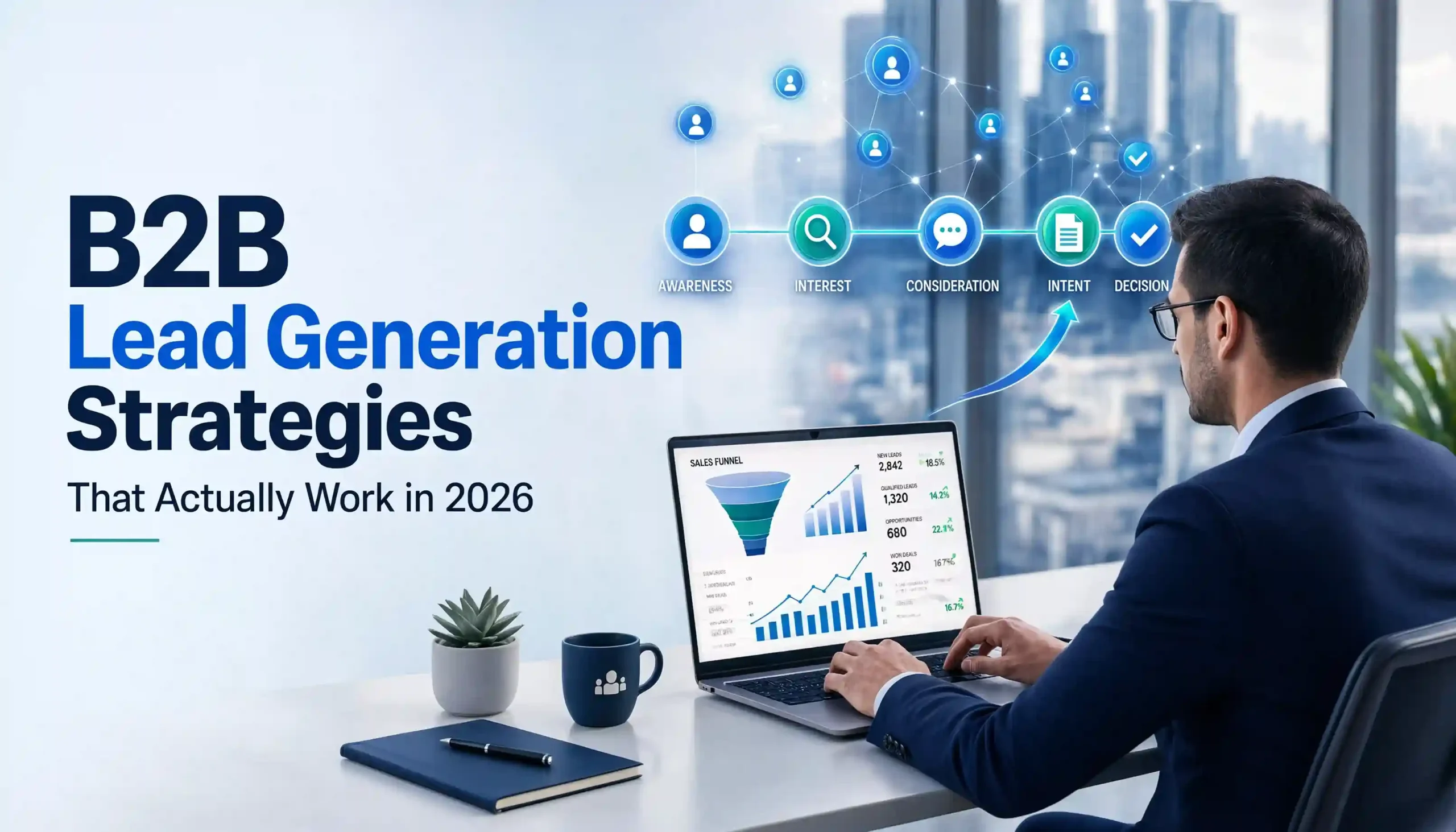
B2B lead generation strategies in 2026 are less about choosing the right channel and more about precision in who you target, how you reach them, and what happens after they respond. This guide covers what’s working for B2B teams right now: signal-based targeting, tech-stack ICP narrowing, credibility as an active channel, and the one thing most guides skip entirely, which is fixing your follow-up before you spend another dollar on lead gen. It also gets into a live debate most “top strategies” posts avoid whether it’s worth optimizing for AI search yet.
If you’ve been doing B2B lead gen for more than a year, you’ve probably noticed the old playbook isn’t producing the same results. Mass email blasts get ignored. Generic LinkedIn outreach gets left on read. Decks that could apply to any company in your industry don’t land. That’s not because lead generation stopped working. It’s because the bar for what counts as “targeted” has moved.
The businesses generating leads well in 2026 aren’t doing more. They’re doing less, with a lot more precision, at every stage, not just the first one.
Why Broad Outbound Is Dead
For years, the standard advice was simple: build a big list, run it through an automated sequence, and let volume do the work. That approach is running out of road. Buyers get colder outreach than ever, so their filter for what’s worth a reply has gotten sharper. At the same time, most B2B buyers now do real research before they’ll even take a call. They check reviews, compare options, read blog content, and form an opinion before a salesperson ever enters the picture.
That shift changes what “effective” lead gen looks like. It’s no longer just about reaching more people. It’s about reaching the right people, with something specific enough to earn a response, and then following through once they do. That’s the thread running through everything below.
1. Target Companies That Already Show Intent
Most teams still default to cold prospecting: build a list, hope some percentage responds. A better starting point is targeting people who’ve already shown interest, even quietly.
Website visitor identification tools like Dealfront (formerly Leadfeeder) and Leadinfo let you see which companies are visiting your site, including high-intent pages like pricing, without them filling out a form. Instead of guessing who might want what you sell, you’re reaching out to companies that have already told you, just not directly.
This flips the usual sequence. Rather than “find people, then hope they’re interested,” it becomes “find people who are already interested, then reach out.” That alone tends to produce warmer conversations than outreach built on a purchased list.
2. Narrow Your ICP by Tech Stack, Not Just Industry
Industry and company size are the default ways most teams define their ideal customer profile. But if your product integrates with or replaces a specific tool, narrowing by confirmed tech stack (for example, only targeting companies that use Salesforce) can produce a much smaller list with a noticeably higher response rate.
Generalist databases like ZoomInfo are useful for broad prospecting, but once your ICP is defined by something specific like a technology dependency, niche and purpose-built technographic data sources tend to outperform them. A smaller, more accurate list beats a bigger, noisier one almost every time.
One thing that’s easy to overlook here: pre-validate your email list before any sequence goes out. Bad or outdated addresses hurt deliverability across your entire domain, not just the individual send. A few bounced campaigns can quietly tank your ability to reach anyone.
3. Build Warm Outreach Into an Actual Process
“Be active on LinkedIn” isn’t a strategy. It’s a suggestion with no shape to it. What separates people who get real results from LinkedIn and warm outreach is that they treat it as a defined, repeatable process:
- Pick one tight ICP and stay with it
- Post about twice a week, focused on real outcomes, not generic thought leadership
- Engage with a specific number of target profiles every day: comment, react, show up consistently
- After a genuine back-and-forth happens, send a short, warm DM. Never open cold
- Track who replies, and move real conversations to a call
The tradeoff is real. This is slower to scale than blasting outreach at volume. But the quality of conversation it produces is usually worth the patience, especially for teams with a longer sales cycle where trust matters more than speed.
4. Treat Credibility as a Lead Gen Channel, Not Just a Trust Signal
Most guides treat case studies and reviews as things you point to after someone’s already interested. Increasingly, they’re working earlier in the funnel than that.
A few specific things worth doing:
- Use short, numbers-driven case studies directly in outreach. A one-pager with a real ROI figure lands better than a generic capabilities deck
- Actively build reviews on sites like G2. Buyers are checking these before they ever talk to you, which makes review volume and quality closer to an acquisition channel than a passive trust badge
- Get your product mentioned in third-party “stack” or integration lists. Being named as part of a bigger, credible tech ecosystem builds trust before a prospect has even heard your pitch
None of this is flashy, but it’s the kind of groundwork that quietly decides whether outreach lands or gets ignored.
5. Use Content and SEO for Long-Term Traffic
Signal-based targeting and warm outreach are faster plays. Content and SEO are among the longer-term B2B lead generation strategies, but they can pay off over time as buyers increasingly research companies before reaching out, and a strong blog or resource library is often part of what they’re reading.
This isn’t a quick win, and it shouldn’t be sold as one. But if buyers are forming an opinion about your company before you’re in the room, having genuinely useful content out there, not just SEO-optimized filler, is part of earning that opinion.
6. Use AI Where It Actually Helps, and Know Where It Backfires
AI tools are useful in a few specific parts of the lead gen process right now:
- Personalizing outreach at scale, faster than doing it by hand
- Qualifying leads more quickly
- Speeding up response times
- Producing content faster
The catch, and it’s an important one, is that automation that feels robotic costs you more than it saves. A fast, generic response often lands worse than a slower, genuinely relevant one. The teams getting real value from AI are using it to remove friction from the parts of the process that don’t require judgment, not to fake the parts that do, like understanding a prospect’s problem.
7. Should You Optimize for AI Search Yet? (The Honest Answer)
This is a live debate right now, and it’s worth laying out both sides instead of quietly picking one.
The case against investing yet: AI search and answer-engine optimization are still immature. Budget and effort spent chasing it right now might be better spent on channels with a proven, measurable return.
The case for starting now: Platforms like Reddit and Quora are used to train the large language models that buyers are increasingly asking for recommendations. Building a genuine, non-spammy presence on these platforms today, by answering real questions and contributing real insight, might compound in ways that are hard to measure yet but hard to catch up on later.
Our take: don’t overinvest in AI search optimization as a primary strategy yet. The data and playbooks aren’t mature enough to justify a big budget shift. But building a real, useful presence on Reddit and Quora is cheap enough that it’s worth doing regardless of which side of this debate turns out to be right.
8. Fix Your Attribution Before You Trust Your Data
Here’s a gap that quietly skews a lot of budget decisions: what your analytics say and what buyers tell you are often different. Someone might convert through a paid ad but tell your sales rep they found you through a colleague’s recommendation, or the reverse.
A simple fix: add a self-attribution field to your lead forms and have sales reps ask directly during calls. It won’t be perfect but comparing that self-reported data against your analytics can reveal channels that are working better, or worse, than your dashboard suggests.
9. If You're a Smaller Team, Focus Beats Breadth
It’s tempting to try to be everywhere: LinkedIn, email, content, events, communities, especially when every channel above sounds worth doing. For smaller teams, that’s usually a mistake.
A more realistic approach: pick two or three channels that fit your business, commit to them for several months, and resist the urge to add a fourth or fifth just because it’s trending. Consistency on a few channels tends to outperform a thin presence spread across many. This is really the same precision idea from earlier in this guide, just applied to your own effort instead of your targeting.
10. More Leads Won't Fix a Broken Follow-Up Process
This is the point most lead generation guides skip entirely, and it might be the most important one here: pouring more leads into a broken sales process doesn’t fix the process. It just produces more wasted opportunities.
Before spending more on lead generation, it’s worth asking a few honest questions:
- Are you following up quickly, or letting leads sit for days?
- Are you responding fast enough to catch someone while they’re still interested?
- Are you taking time to understand the prospect’s problem, or moving straight to a pitch?
- Are you building trust before asking for the sale?
- Is there a clear, defined path that moves a lead from first contact to a decision?
Sometimes the biggest growth opportunity isn’t finding more prospects. It’s converting the ones you already have more of the time. That process is a critical part of effective B2B lead generation services, particularly when qualification and follow-up are built into the workflow. If your team is generating a reasonable number of leads but conversion feels weak, that’s usually a process problem, not a lead volume problem, and no amount of additional spend on the tactics above will fix it.
Frequently Asked Questions
Is cold email dead in 2026?
Not dead, but the version most people are still running is. High-volume, generic cold email has diminishing returns. What’s still working is tightly targeted, well-personalized outreach to a narrow list sent to fewer people, with more relevance to each one.
Should I optimize for AI search yet?
Not as a primary strategy. The space is still too immature to justify a major budget shift. That said, building a genuine, non-spammy presence on platforms like Reddit and Quora now is low-cost and may pay off later, regardless of how AI search optimization develops.
Do I need to be active on every channel?
No. Especially for smaller teams, focusing on two or three channels and sustaining that effort for months tends to outperform spreading thin across everything. Pick the channels that fit your buyers and your team’s capacity and go deep rather than wide.
What are the most effective B2B lead generation strategies in 2026?
The most effective B2B lead generation strategies focus on precise targeting, buyer intent, warm outreach, credibility, useful content, and strong follow-up rather than simply increasing outreach volume.
Right Pace Techmedia Editorial Team
Right Pace Techmedia editorial team comprises B2B growth specialists and campaign strategists with over 7 years of hands-on experience delivering measurable pipeline results for globally recognized technology brands including Oracle, SAP, Salesforce, Siemens, and Lenovo. Having engineered over 1.8 million verified leads across lead generation, account-based marketing, data intelligence, and demand generation programs, our writers draw from real campaign outcomes not borrowed theory. Every article published on this blog reflects practitioner-level knowledge, reviewed by senior professionals who have managed complex B2B campaigns across industries, geographies, and buying committee structures. We write what we know because we’ve lived it.
Our Latest Bolgs

Why MSP Lead Generation Fails
Lead Generation Why Most MSP Lead Generation Falls Flat (And What Actually Works) Last Updated: Sept 09, 2026 | Editorial Team Most
B2B Lead Generation Strategies for 2026
Lead Generation 10 B2B Lead Generation Strategies That Actually Work in 2026 Last Updated: August 26, 2026 | Editorial Team B2B lead

FinTech Lead Generation Compliance Challenge
Lead Generation The Compliance Challenge in FinTech Lead Generation (And How to Solve It) Last Updated: August 19, 2026 | Editorial Team


