ABM
How to Generate Qualified Enterprise Leads for Learning
Management Systems

Generating qualified enterprise leads for Learning Management Systems isn’t about volume it’s about precision. It requires a thoughtful mix of account-based marketing, understanding how multiple stakeholders influence decisions, and using intent signals to focus on companies that are already in evaluation mode.
The strongest results come from identifying high-value target accounts using firmographic and technographic data, then engaging key decision-makers such as L&D leaders, HR heads, IT teams, and finance stakeholders with personalized, outcome-driven messaging across channels like LinkedIn, email, and industry events.
Effective LMS lead generation puts quality ahead of quantity. Instead of chasing every inbound lead, it focuses on organizations actively researching training platforms, delivers industry-specific messaging that speaks to compliance and operational needs, and supports prospects throughout the long enterprise buying cycle. Educational resources, ROI tools, and real-world proof points build trust over time and move deals forward far more effectively than aggressive sales tactics.
Understanding the Enterprise LMS Buyer Journey
Enterprise LMS purchases are rarely driven by a single decision-maker. Instead, they involve a buying committee with different priorities and success metrics.
Typical stakeholders include:
- Learning & Development leaders, focused on learner engagement and training outcomes
- HR leaders, concerned with retention, skills development, and workforce planning
- IT teams, responsible for security, integrations, and system scalability
- Finance and procurement, evaluating total cost of ownership and ROI
Each group views the LMS through a different lens. L&D wants effective learning experiences, IT wants seamless integration, and finance wants proof of value. If your lead generation strategy speaks to only one persona, it will stall. Enterprise LMS marketing must address all stakeholders simultaneously, aligning messaging to their specific concerns throughout the buying journey.
Defining a Precise Ideal Customer Profile
Broad targeting wastes budget and attracts unqualified leads. A clear Ideal Customer Profile (ICP) is the foundation of qualified enterprise demand generation.
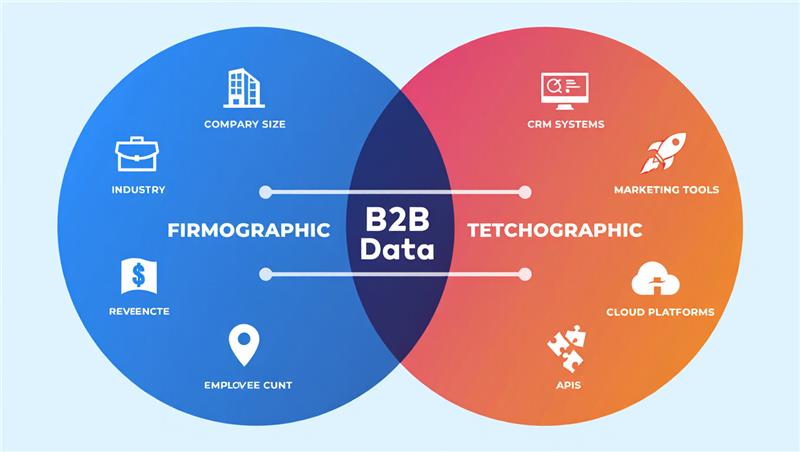
Key firmographic criteria usually include:
- 500+ employees
- Regulated or compliance-heavy industries
- Strong revenue base and stable operations
- Presence in defined geographic markets
Beyond firmographics, buying signals matter more than company size alone. High-intent indicators include:
- Use of legacy or competitor LMS platforms
- Rapid headcount growth
- Job postings for L&D, training, or HR technology roles
- Recent funding or expansion initiatives
- New regulatory or compliance requirements
For example, a healthcare organization with a large workforce, outdated training systems, and an open role for a Head of Learning represents a far stronger opportunity than a generic enterprise account with no urgency.
Using Intent Data to Focus on Active Buyers
Intent data allows LMS vendors to engage companies that are already researching training solutions instead of trying to manufacture interest.
Common third-party intent signals include:
- Visits to LMS comparison and review platforms
- Searches for enterprise LMS and training software terms
- Engagement with competitor content
- Attendance at industry webinars and virtual events
First-party intent signals from your own channels are equally important:
- Repeated visits to pricing or demo pages
- Downloads of implementation guides or ROI tools
- Webinar attendance and follow-up engagement
- Interaction with integration or security documentation
Accounts can then be prioritized by intent strength and ICP fit, ensuring sales teams focus first on organizations that are both qualified and actively evaluating solutions.
Creating Industry-Specific Content That Builds Trust
Enterprise buyers do not want generic platforms claiming to work for everyone. They want solutions that clearly address their industry’s compliance, operational, and workforce challenges.
Effective vertical-focused content includes:
- Healthcare training for compliance, certifications, and clinical onboarding
- Financial services content addressing regulatory audits and licensing requirements
- Manufacturing resources focused on safety, equipment training, and multilingual workforces
- Retail and hospitality guides for high-volume onboarding and frontline training
High-performing content formats include industry case studies, compliance-focused whitepapers, ROI calculators, and practical implementation guides. When prospects see their exact challenges reflected in your content, trust builds faster and qualification improves naturally.
Executing Multi-Channel Account-Based Marketing
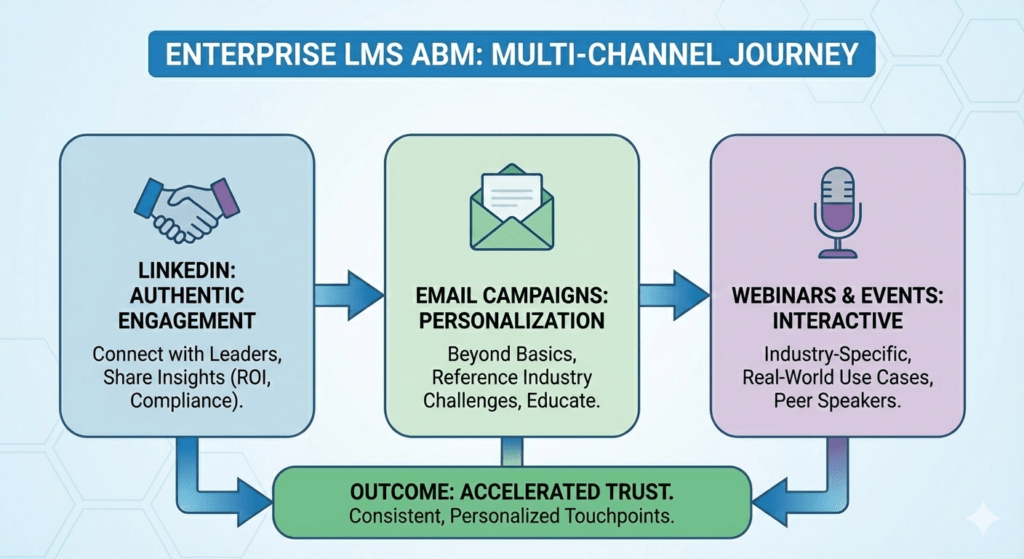
Enterprise LMS buyers engage across multiple channels over time. A strong ABM strategy ensures consistent, personalized touchpoints throughout that journey.
On LinkedIn, focus on authentic engagement with senior leaders, sharing insights on training ROI, compliance risk, and workforce transformation rather than product-heavy messaging.
Email campaigns should be personalized beyond basic merge fields, referencing industry challenges, company initiatives, and real outcomes. Sequences should educate and build credibility, not rush prospects toward demos.
Webinars and virtual events work best when they are industry-specific, interactive, and focused on real-world use cases. Including existing customers as speakers adds peer validation and accelerates trust.
Qualifying Leads Through Progressive Engagement
Not every engaged contact is sales-ready. Strong qualification protects sales teams from wasting time while ensuring high-intent accounts receive timely attention.
A balanced lead scoring model should combine:
- Explicit signals like role, company size, industry, and authority
- Implicit signals such as demo requests, pricing visits, and multi-stakeholder engagement
Frameworks like BANT still apply, but should be used flexibly. The goal is not to disqualify early, but to understand readiness and guide prospects appropriately through the evaluation process.
Measuring What Drives Revenue
Enterprise LMS marketing success should be measured by pipeline impact, not surface-level engagement.
Key metrics to track include:
- Sales-qualified leads generated
- Marketing-sourced opportunities
- Deal size and win rates
- Sales cycle length by channel
- Multi-stakeholder engagement within target accounts
These metrics connect marketing activity directly to revenue, giving leadership clarity on what’s driving real business outcomes.
Key Takeaways
- Define a clear ICP based on real buying signals
- Use intent data to prioritize active buyers
- Build vertical-specific content that demonstrates expertise
- Engage all stakeholders, not just one persona
- Run coordinated multi-channel ABM campaigns
- Qualify leads systematically to protect sales efficiency
- Measure pipeline impact, not vanity metrics
- Plan for long, value-driven enterprise buying cycles
FAQs
It’s the process of attracting and qualifying large organizations that are actively evaluating Learning Management Systems, using targeted, account-based strategies rather than high-volume lead tactics.
Typically L&D leaders, HR executives, IT teams, and finance or procurement stakeholders—each with different priorities.
Most enterprise LMS purchases take 6–18 months, depending on internal approvals and budget cycles.
Intent data helps identify companies already researching LMS solutions, allowing you to focus on buyers with real purchase intent.
A qualified lead matches your ideal customer profile and shows strong buying signals like demo requests, pricing visits, or multi-stakeholder engagement.
It shows you understand industry-specific challenges such as compliance, training scale, and regulations—building trust faster.
LinkedIn, targeted email, webinars, industry events, and content partnerships work best together.
Focus on revenue-driven metrics like sales-qualified leads, opportunities created, and deal size—not just traffic or downloads.

Right Pace Techmedia Editorial Team
The Right Pace Techmedia editorial team comprises B2B growth specialists and campaign strategists with over 7 years of hands-on experience delivering measurable pipeline results for globally recognized technology brands including Oracle, SAP, Salesforce, Siemens, and Lenovo. Having engineered over 1.8 million verified leads across lead generation, account-based marketing, data intelligence, and demand generation programs, our writers draw from real campaign outcomes not borrowed theory. Every article published on this blog reflects practitioner-level knowledge, reviewed by senior professionals who have managed complex B2B campaigns across industries, geographies, and buying committee structures. We write what we know because we’ve lived it.
Our Latest Bolgs

Firmographic and Technographic Data for B2B SaaS ICP
Firmographic Data How to Use Firmographic and Technographic Data to Define Your ICP for B2B SaaS Quick Answer To build an ICP

Firmographic Segmentation for ABM
Firmographic Data How to Use Firmographic Segmentation for ABM Campaigns That Actually Convert Quick Answer Firmographic segmentation for ABM is the process
Firmographic vs Technographic Data: What B2B Teams Get Wrong About Both
Firmographic Data Firmographic vs Technographic Data: What B2B Teams Get Wrong About Both Quick Answer: Firmographic data tells you who a company


