Lead Generation
The Metaverse for B2B? A little uncharted potential for Lead Engagement

B2C businesses like Ikea, Nike, Gucci, and Sephora have already embraced the metaverse potential and made waves in the marketing landscape, attracting prospects like never before.
But are B2B businesses far behind in embracing the B2B Metaverse and its potential? Not really.
Let us rewind to 1992, when the celebrated author Neal Stephenson first wrote about the metaverse in his sci-fi novel Snow Crash, and people laughed it away because, hello! Fiction is supposed to be larger-than-life and far from reality.
Who knew a few years down the line, avatars, virtual real estate investments, tokens, and privacy encroachment would be a reality, jaw-droppingly worthy at the mere synchronicity of events?
Let us welcome the present moment now, and since we are in the Metaverse reality, or let us say virtual reality, the time beckons to be smarter, on our toes, and strike while the iron is hot!
Facts about the Metaverse Advertising Market
Metaverse Market Growth
The global metaverse market has grown at an impressive pace, reaching an estimated USD 156.07 billion in 2025. This momentum is expected to continue into 2026, with the market projected to climb to around USD 227.77 billion as more industries begin adopting immersive technologies.
Looking further ahead, analysts see even bigger potential. Many forecasts now point toward the metaverse becoming a multi-trillion-dollar economy by the early 2030s, fuelled by immersive commerce, enterprise adoption, and the rise of digital-first business models.
United States Metaverse Market
The United States continues to play a leading role in the metaverse economy. While specific advertising revenue projections for 2026 such as estimates around USD 749.2 million highlight this dominance, the bigger story is broader adoption. Enterprise use cases are expanding rapidly, and North America remains the strongest contributor to overall metaverse growth, particularly in business and marketing applications.
VR, AR, and Metaverse Hardware Adoption
Behind this growth is a rapidly maturing hardware ecosystem. The extended reality (XR) market which includes virtual and augmented reality is expected to grow steadily throughout the decade. VR headsets and related devices are seeing strong double-digit growth rates, with projections suggesting a CAGR of nearly 38.6% between 2025 and 2029.
By 2026, the global VR market alone had already crossed USD 20 billion in revenue, and the number of users continues to rise as devices become more accessible and enterprise ready.
Enterprise and Customer Readiness
Adoption is not just about technology it’s also about mindset. Recent research shows growing comfort among both businesses and consumers when it comes to virtual experiences. By 2026, it’s expected that around one in four people may spend at least an hour each day inside metaverse environments, whether for work, shopping, social interaction, or entertainment.
Earlier findings such as around 40% of companies recognizing clear business value in having a metaverse presence still provide important context. What’s changed since then is the pace of growth, which continues to reinforce the belief that immersive digital environments are becoming a practical business channel rather than a passing trend.
The numbers underpin the looming potential for B2B enterprises to incorporate metaverse strategies, unlocking new avenues for Metaverse Lead Generation. How can the business landscape practically gain from their metaverse offerings to get better leads?
How can you, as a B2B enterprise owner, leverage the B2B Metaverse for better lead engagement and prospecting?
Host Immersive Virtual Product Demonstrations and Showcases
Webinars and videos are surely some of the most popular ways to syndicate your thought-leadership content and product demonstrations to a wide pool of the buyer community. With changing times and reduced attention spans, a 3D demonstration of software capabilities in a virtual space represents a powerful evolution in the Metaverse for B2B lead engagement.
The metaverse also offers ample opportunities to create interactive 3D environments where potential clients can explore your technology and products firsthand. Easy virtual navigation will help your buyer gauge your solutions better.
Develop Interactive Virtual Training and Educational Experiences
Showcasing your product expertise in front of active solution seekers is essential to capture the right intent at the right time. Offering interactive virtual training of your products enhances your credibility and attracts professionals seeking to upskill or learn about specific technologies relevant to your offerings. This also cements your position as an industry expert who knows how to walk the talk.
Gamified Lead Generation and Qualification Experiences
Design interactive games and challenges within your metaverse spaces relevant to your industry and solutions. This approach to Metaverse Lead Generation can subtly educate potential leads about your offerings while capturing valuable data about their interests and pain points.
For example, a cybersecurity company could create a virtual “capture the flag” game that tests participants’ knowledge of security vulnerabilities, identifying individuals actively engaged in this domain who could be strong leads for their services.
Industry-specific Virtual Meetups
Enterprises can collaborate to host virtual networking events within the metaverse focused on specific IT niches or challenges. This allows prospects with shared interests to connect with your experts and each other in a more engaging way than a traditional online forum, creating a dynamic environment for Metaverse for B2B lead engagement. They can further utilize AI within your metaverse spaces to connect prospects with relevant members of your team based on their interests and needs, facilitating more targeted and productive conversations.
Create immersive appointments with sales-qualified leads
While the entire B2B landscape connects through traditional virtual meetings on these overused portals like Zoom, Teams, Google Meet, GoToMeetings, and Webex, your enterprise can stay ahead of your peers by offering simulated environments. Taking a small step like this would ensure better connectivity with your buyer and build trust while positioning you at a higher rank for business partnership. Such immersive experiences demonstrate a commitment to innovation and a dedication to providing exceptional value, setting you apart as a leader in the B2B Metaverse and attracting more serious and qualified prospects eager to collaborate.
Having said that, the metaverse offers multiple avenues to engage with your buyer community through technological wonders. It is an age of quick validation and exceptional experiences, especially when AI is brimming with the latest features and capabilities. The neck-to-neck competition across segments almost forces you to think out of the box. The time is ideal to set the pace for others to follow. This has the potential to be your unique selling point if nothing else!
Conclusion
We are discussing massive investments here, albeit for a bright, tech-savvy future. Remember how we stopped connecting through SMS with those who did not start using WhatsApp sooner or later? Businesses might lose relevance if they do not accept the potential of the B2B Metaverse for a start, if not embracing it full-fledged in their marketing mix. It is only wise to be future-forward rather than in a delusional reality where you will still be complacent and laid-back about your goals of market dominance. What works today might not work 10 years down the line. The potential for Metaverse Lead Generation and the depth of Metaverse for B2B lead engagement surpass the scope of lead conversions that exist now. The idea is to slowly integrate its potential and have a futuristic strategy for amplified business success.
Right Pace Techmedia Editorial Team
The Right Pace TechMedia editorial team comprises B2B growth specialists and campaign strategists with over 7 years of hands-on experience delivering measurable pipeline results for globally recognized technology brands including Oracle, SAP, Salesforce, Siemens, and Lenovo. Having engineered over 1.8 million verified leads across lead generation, account-based marketing, data intelligence, and demand generation programs, our writers draw from real campaign outcomes not borrowed theory. Every article published on this blog reflects practitioner-level knowledge, reviewed by senior professionals who have managed complex B2B campaigns across industries, geographies, and buying committee structures. We write what we know because we’ve lived it.
Our Latest Blogs
Firmographic and Technographic Data for B2B SaaS ICP
Firmographic Data How to Use Firmographic and Technographic Data to Define Your ICP for B2B SaaS Quick Answer To build an ICP
Firmographic Segmentation for ABM
Firmographic Data How to Use Firmographic Segmentation for ABM Campaigns That Actually Convert Quick Answer Firmographic segmentation for ABM is the process
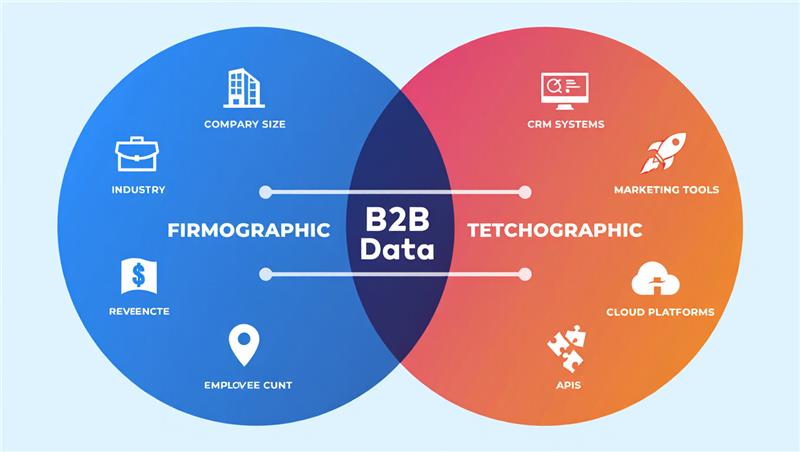
Firmographic vs Technographic Data: What B2B Teams Get Wrong About Both
Firmographic Data Firmographic vs Technographic Data: What B2B Teams Get Wrong About Both Quick Answer: Firmographic data tells you who a company


