Data Intelligence
Firmographic vs Technographic vs Intent Data: What’s the Difference and Why It Matters for B2B Growth
Last Updated: April 22, 2026 | Editorial Team
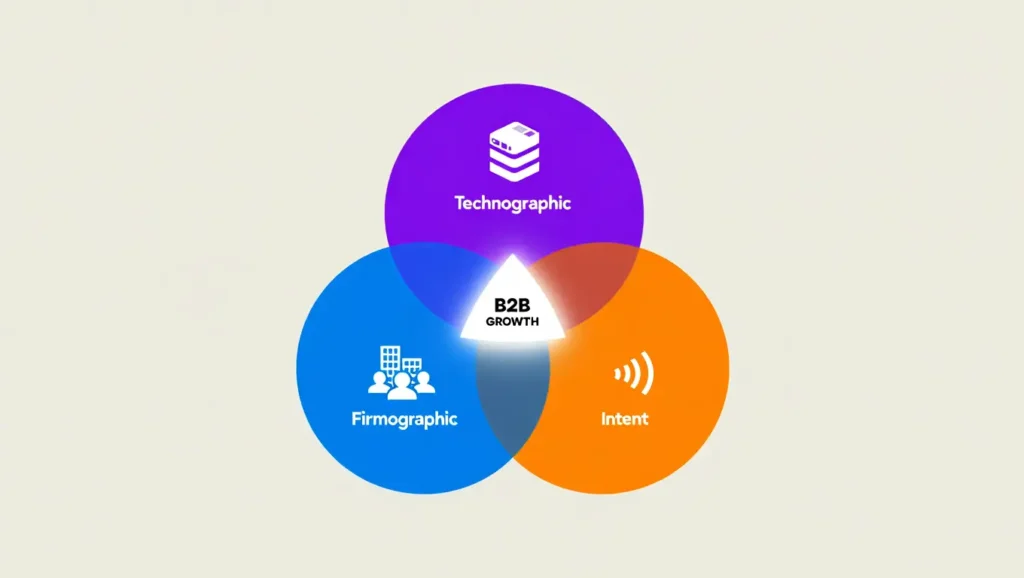
Quick Answer:
Firmographic data describes what a company looks like: its size, industry, revenue, and location. Technographic data reveals what technology that company uses. Intent data shows what topics or solutions that company is actively researching right now. Together, they tell you who to target, whether they are a fit, and when to reach out.
Most B2B teams collect data. Fewer know which type to use and when. That gap is exactly why so many marketing and sales efforts underperform, not because the team is not working hard, but because they are targeting with the wrong signals at the wrong time.
Understanding the difference between firmographic, technographic, and intent data is not just an academic exercise. It is the foundation of a targeting strategy that converts. Each data type answers a different question about your buyer. When you stack all three, you get a complete picture of who to pursue, why they are a fit, and why right now is the right moment.
This guide breaks each one down clearly, shows you how they work together, and helps you figure out where to start.
What Is Firmographic Data?
Firmographic data is the company-level equivalent of demographic data. It describes the structural characteristics of a business: who they are, how big they are, where they operate, and what industry they are in.
Think of it as the profile of a company before you ever make contact. It does not tell you what they need or when they are ready to buy. It tells you whether they belong in your pipeline at all.
Core firmographic attributes include:
- Company name, legal structure, and headquarters location
- Industry classification using SIC or NAICS codes
- Employee headcount and revenue range
- Funding stage and ownership type (public, private, subsidiary)
- Geographic footprint and number of office locations
- Growth indicators such as hiring trends and expansion signals
This data powers your Ideal Customer Profile (ICP). Without it, you cannot define what a good-fit account looks like. And without that definition, every other targeting effort is built on guesswork.
For example, if you sell enterprise HR software, firmographic data filters your universe to companies with 500 or more employees, operating in regulated industries, within your target geographies. That list might go from 100,000 companies to 3,000 high-fit accounts. That is where you focus.
Firmographic data also plays a critical role in lead scoring, account routing, and CRM hygiene. When the data is clean and current, your entire revenue operation runs more efficiently.
Right Pace Techmedia’s firmographic data solutions deliver verified, CRM-ready company profiles across global markets so your team always works from an accurate, up-to-date foundation.
What Is Technographic Data?
Technographic data tells you what technology a company uses. This includes the software stack, platforms, tools, and infrastructure a business has adopted across their operations.
While firmographics tell you who a company is, technographics tell you how they operate. A company using Salesforce as their CRM has different needs, a different buying process, and a different integration landscape than one running on a legacy system.
Common technographic signals include:
- CRM platforms such as Salesforce, HubSpot, or Zoho
- Marketing automation tools like Marketo or Pardot
- Cloud infrastructure including AWS, Azure, or Google Cloud
- Analytics and business intelligence software
- E-commerce platforms, customer data platforms, or ERP systems
- Security tools, DevOps infrastructure, and communication software
Why does this matter? Because a company’s tech stack signals their priorities, their budget comfort with software, and their openness to new solutions.If you sell a tool that integrates with Salesforce, knowing which companies already run on Salesforce lets you lead with relevance. You are not asking them to change behavior. You are extending what they already use and trust.
Technographic data also reveals competitive displacement opportunities. If a prospect is using a direct competitor’s tool, you know the need is real. The question shifts from whether they need a solution to whether yours is the better fit
One important caveat: technographic data can go stale quickly. Companies change tools, run parallel systems, or phase out platforms without announcement. Always use technographic data from a provider that refreshes frequently and validates across multiple sources.
What Is Intent Data?
Intent data captures behavioral signals that show a company is actively researching a topic, problem, or solution. It is the closest thing to knowing your buyer is in-market before they ever fill out a form.
Intent data does not tell you who a company is or what tools they use. It tells you what they are thinking about right now. That timing signal is what makes it so powerful for outreach prioritization.
Intent data sources typically include:
- Content consumption across industry publications and blogs
- Search behavior around specific keywords or solution categories
- Review site visits on platforms like G2, Capterra, or TrustRadius
- Social engagement and topic following on LinkedIn
- Ad interaction signals and retargeting behavior
- Third-party data co-ops aggregating activity across the web
There are two categories to understand. First-party intent comes from behavior on your own website: pages visited, content downloaded, pricing pages viewed. This is the most reliable signal because you own it.
Third-party intent is aggregated from behavior across the broader web by providers like Bombora or G2. It gives you visibility into accounts researching your solution category even before they land on your site.
Intent data answers the timing question. A company might fit your ICP perfectly and use the right tech stack. But if they are not actively evaluating solutions, outreach will likely be ignored. Intent data tells you who is in the window right now.
To learn how to turn these intent signals into qualified leads – including sourcing strategies, scoring models, account prioritization, and campaign execution – read our detailed guide: How to Use B2B Intent Data for Lead Generation
Firmographic vs Technographic vs Intent Data: Core Differences at a Glance
Each data type serves a distinct purpose in your B2B targeting strategy. Here is how they compare:
| Data Type | Primary Question Answered | Data Type | Update Frequency | Best Use Cases | Example Signal |
|---|---|---|---|---|---|
| Firmographic Data | Who is this company? | Structural and descriptive | Monthly to quarterly | ICP definition, account filtering, CRM enrichment | 500 employees, SaaS company, Series B funded, headquartered in the US |
| Technographic Data | What tools does this company use? | Behavioral and contextual | Weekly to monthly | Integration fit, competitive displacement, relevance scoring | Currently using Salesforce and Marketo |
| Intent Data | What is this company researching right now? | Real-time behavioral signals | Daily to weekly | Outreach timing, pipeline prioritization, demand generation | Researching data enrichment tools and visiting competitor review pages |
How These Three Data Types Work Together in ABM
The real power is not in any single data type. It is in how they stack. Here is how a high-performing ABM workflow uses all three:
Step 1: Filter with Firmographics
Start by defining your ICP using firmographic data. Set the parameters: company size, industry, revenue range, geography. This builds your target account universe and removes bad-fit accounts from the start.
Step 2: Qualify with Technographics
Within that universe, use technographic data to narrow further. Filter for companies using tools that indicate integration fit or competitive displacement opportunities. This improves message relevance and shortens the qualification conversation.
Step 3: Prioritize with Intent
From your qualified list, surface the accounts showing active research behavior in your category. These are your highest-priority accounts to contact today. The timing is right. The fit is there. The relevance is built in.
Intent data captures real-time behavioral signals that a company is actively researching solutions. For a complete framework on turning these signals into qualified leads, read our guide on how to use B2B intent data for lead generation.
Teams that run this model consistently report shorter sales cycles, higher reply rates, and better conversion from MQL to closed-won. It works because every outreach decision is backed by data, not instinct.
Common Mistakes B2B Teams Make with These Data Types
Even experienced revenue teams misuse these data types. Here is what to watch for:
Using intent data without firmographic filters
High intent from the wrong company type is still a bad lead. Always qualify on fit before prioritizing on timing.
Treating technographic data as permanent
Tech stacks change. A company that was on HubSpot six months ago may have migrated to Salesforce. Stale technographic data leads to irrelevant outreach and broken pitches.
Over-relying on a single intent data provider
Third-party intent coverage varies by provider. Use intent signals to prioritize, not as absolute truth. Layer first-party signals on top whenever possible.
Ignoring firmographic data quality
Dirty company records corrupt everything downstream: lead scoring, account routing, personalization, and reporting. This is the most foundational data layer and the most commonly neglected.
Treating all three data types as interchangeable
Each type answers a different question. Substituting one for another or combining them without a clear framework produces noisy, unreliable outputs.
Which Data Type Should You Prioritize First?
If you are building your data strategy from scratch, start with firmographics. It is the most foundational layer. Everything else depends on it.
Without accurate firmographic data, your ICP is theoretical. Your lead scoring is unreliable. Your segmentation is inconsistent. And when technographic or intent data layers on top of a dirty foundation, the errors compound.
Once firmographics are clean and flowing into your CRM, add technographic data to sharpen message relevance. Then layer intent data to drive timing and prioritization.
For more mature teams already running ABM programs, the focus should shift to data freshness and integration. How often is your firmographic data refreshed? Is your technographic data validated across multiple sources? Are your intent signals flowing automatically into your CRM or scoring model?
If you need to strengthen your firmographic foundation, Right Pace Techmedia’s data intelligence services offer verified, compliance-ready firmographic data that integrates directly into your CRM or marketing stack.
Firmographic Data and Compliance: What You Need to Know
One area that often gets overlooked is compliance. B2B data collection and usage is subject to regulations including GDPR in Europe and CCPA in California. This applies to firmographic data as much as personal data.
When sourcing firmographic data, confirm that your provider tracks provenance, maintains consent records where applicable, and refreshes data in line with regulatory requirements. A data provider that cannot answer those questions is a liability, not an asset.
Compliance-first data collection is not just about avoiding fines. It is also a signal of data quality. Providers who take compliance seriously tend to maintain more accurate, better-sourced records across the board.
Conclusion
The difference between firmographic, technographic, and intent data comes down to three questions. Firmographics answer who to target. Technographics answer which ones fit. Intent data answers who to call today.
Most B2B growth problems are not strategy problems. They are data problems. Teams that get this right do not just outperform their competitors. They make smarter decisions faster, with less waste, across the entire revenue function.
Start with the right foundation. Build from there.
Right Pace Techmedia Editorial Team
Right Pace Techmedia editorial team comprises B2B growth specialists and campaign strategists with over 7 years of hands-on experience delivering measurable pipeline results for globally recognized technology brands including Oracle, SAP, Salesforce, Siemens, and Lenovo. Having engineered over 1.8 million verified leads across lead generation, account-based marketing, data intelligence, and demand generation programs, our writers draw from real campaign outcomes not borrowed theory. Every article published on this blog reflects practitioner-level knowledge, reviewed by senior professionals who have managed complex B2B campaigns across industries, geographies, and buying committee structures. We write what we know because we’ve lived it.
Our Latest Bolgs

Top B2B Data Intelligence Providers USA 2026
Data Intelligence Top 15 B2B Data Intelligence Providers in the USA in 2026 Last Updated: June 08, 2026 | Editorial Team Why

DataCaptive Alternatives
Data Intelligence Top DataCaptive Alternatives for B2B Data Intelligence in 2026 Last Updated: May 20, 2026 | Editorial Team Let’s be honest.

Top Technographic Data Providers for B2B Targeting
Technographic Data Top 10 Technographic Data Platforms for B2B Targeting (2026) Last Updated: May 6, 2026 | Editorial Team If your sales


