Technographic Data
How Technographic Segmentation Transforms B2B Lead Generation
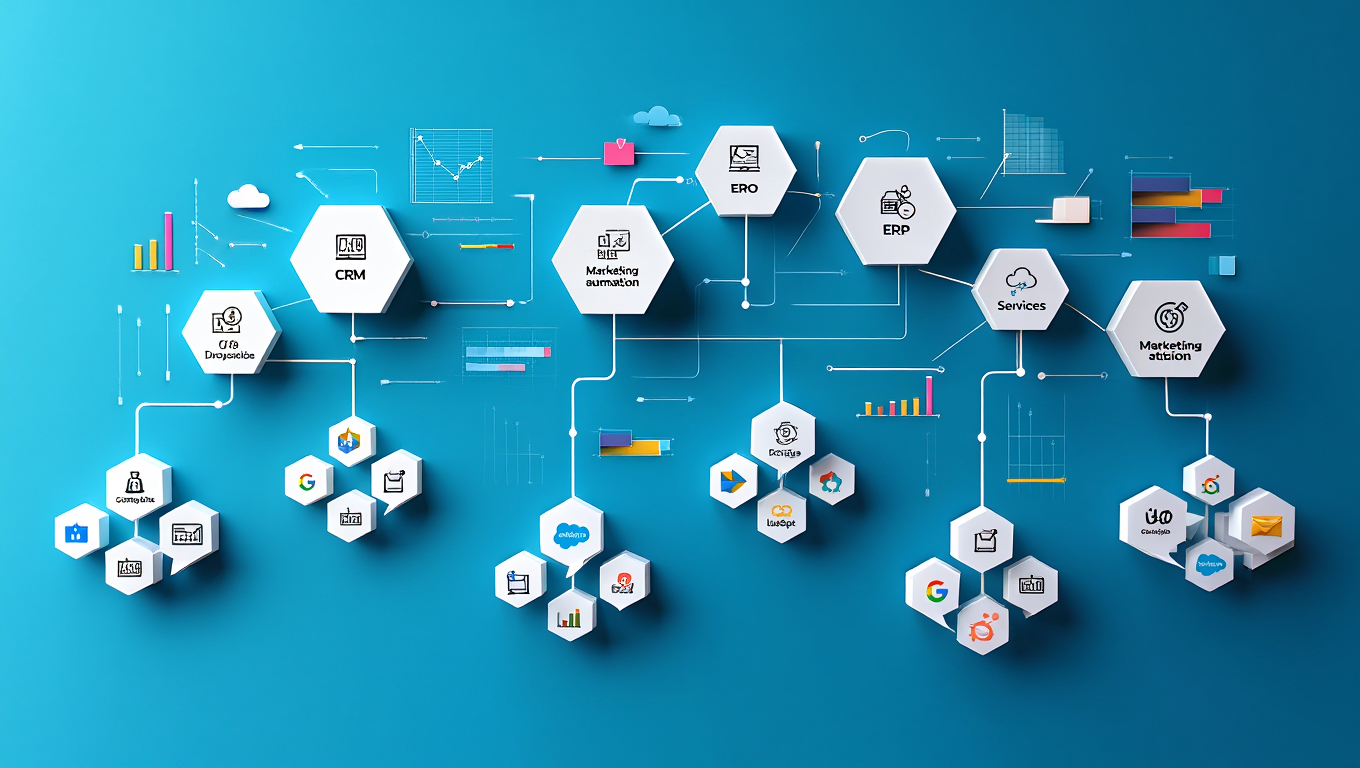
Reaching the right decision-makers has become increasingly challenging in today’s saturated B2B landscape. Inbox fatigue, broad targeting, and generic outreach erode engagement long before a conversation even begins. Traditional firmographic filters industry, revenue, employee size still have value, but they fail to reveal how a business actually operates or where genuine buying intent exists.
Technographic segmentation changes that completely.
By understanding the technologies a company uses, B2B marketers can build highly relevant, intent-driven segments that convert at a far higher rate. This approach eliminates guesswork and ensures every touchpoint email, ads, calls, or ABM is aligned with real needs and live technology environments.
Below, we explore how technographic segmentation elevates B2B lead generation, along with practical examples, best-practice insights, and high-impact use cases.
What Is Technographic Segmentation?
Technographic segmentation is the process of categorising companies based on the technologies, software platforms, and tools they currently rely on.
Rather than asking “What type of company is this?”, technographics answer deeper, revenue-driven questions such as:
- Which CRM is the business using?
- What cloud environment supports their infrastructure?
- Are they operating with marketing automation or legacy systems?
- Which cybersecurity, ERP, analytics, or collaboration tools are installed?
These insights create precise, high-intent audience segments that align directly with your solution’s capabilities ensuring your outreach feels relevant from the very first interaction.
Why Traditional Lead Generation Isn’t Enough
A major challenge in B2B campaigns is over-reliance on broad or outdated filters such as:
- General industry categories
- Estimated company size
- Standard job titles
This approach typically results in:
- Weak open and response rates
- Low connect ratios for SDRs
- Wasted marketing spend
- Long, unproductive sales cycles
Firmographic targeting alone cannot reveal a company’s operational maturity, readiness to buy, or compatibility with your solution.
Technographics fill that gap.
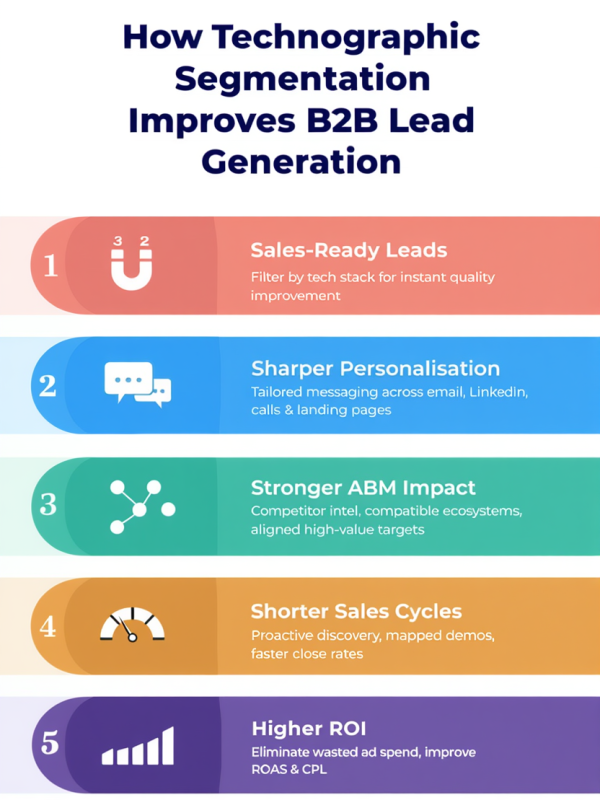
How Technographic Segmentation Improves B2B Lead Generation
i. More Relevant and Sales-Ready Leads
When prospects are filtered based on the technologies they already use, lead quality improves instantly.
For example:
- A SaaS brand offering Salesforce integrations can target companies currently using Salesforce (and even specific editions).
- A cybersecurity provider can focus exclusively on organisations lacking enterprise-grade protection or operating legacy firewalls.
Technographics ensure your pipeline includes leads that are not only a match demographically, but also technologically ready to engage.
ii. Sharper Personalisation Across All Campaign Channels
Technographic context enables messaging that feels tailored, specific, and valuable.
Instead of:
“We help companies improve marketing efficiency.”
You can confidently say:
“We help HubSpot users optimise attribution and boost campaign performance.”
This level of relevance significantly improves:
- Email open and reply rates
- LinkedIn conversations
- Cold call success
- Landing-page conversions
In other words, technographics turn generic outreach into meaningful dialogue.
iii. Stronger Account-Based Marketing (ABM) Impact
Precision is everything in ABM. With technographic intelligence, you can:
- Identify accounts already using competitor tools
- Prioritise companies with compatible tech ecosystems
- Segment accounts by technology maturity and expansion potential
- Align sales and marketing on clearly defined high-value targets
This results in tighter alignment, reduced friction, and greater deal velocity.
iv. Shorter Sales Cycles
When sales teams understand a prospect’s technology stack before the first conversation:
- Discovery calls become sharper
- Objections can be addressed proactively
- Demos can be mapped directly against the prospect’s current tools
- Integration concerns are handled early
The result? Faster movement through the pipeline and improved close rates.
v. Higher ROI and Reduced Wastage on Ad Spend
Technographic data allows you to refine:
- LinkedIn Ads
- Display campaigns
- Retargeting audiences
By removing irrelevant technology environments, brands eliminate wasted impressions and focus budgets on accounts with genuine potential improving ROAS and CPL.
Real-World Technographic Segmentation Examples (B2B Use Cases)
Example 1. SaaS Demand Generation
A SaaS provider offering a Salesforce extension segments audiences by:
- Use of Salesforce
- Edition type (Enterprise, Unlimited, etc.)
- Complementary tools like Marketo or Pardot
Outcome:
A higher rate of demo bookings and significantly lower CPL.
Example 2. Cloud Migration Services
A cloud consultancy targets accounts based on:
- Presence of on-premise servers
- AWS vs Azure usage
- Legacy ERP environments
Outcome:
More relevant outreach and stronger adoption of migration offers.
Example 3. Digital Marketing Agency
A B2B agency focuses on companies that:
- Use HubSpot but lack advanced analytics
- Run paid ads without proper attribution tools
Outcome:
Clear positioning as a solution that fills operational gaps.
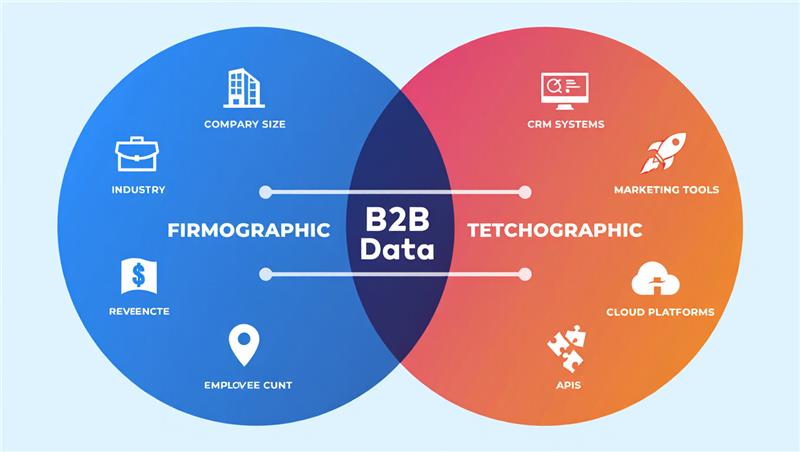
Technographic vs Firmographic Segmentation
| Criteria | Firmographic Segmentation | Technographic Segmentation |
|---|---|---|
| Focus | Low to Medium | High |
| Intent Level | Low to Medium | High |
| Targeting Style | Broad | Precision-led |
| Sales Readiness | Indirect | Direct |
The best-performing demand generation strategies leverage both, but technographics typically produce faster, more measurable returns.
How to Implement Technographic Segmentation Effectively
Implementing technographic segmentation isn’t just about collecting data it’s about operationalizing it in a way that drives measurable outcomes. Based on real-world campaigns, here’s how to make it work:
Define ICP with Tech Triggers: Instead of a generic ICP, identify technology signals that correlate with conversion. For example, companies using Salesforce but lacking advanced analytics tools often show higher adoption rates for marketing automation add-ons.
Invest in Verified Data Partners: Outdated technographic data kills ROI. Brands that rely on enrichment partners with real-time refresh cycles see 20–30% higher campaign efficiency.
Segment by Business Need, Not Just Tools: A company using AWS may not be a fit unless they’re actively migrating workloads. Context matters pair tool usage with intent signals.
Embed Tech Context in Sales Playbooks: SDRs should be trained to reference a prospect’s stack naturally. For instance: “I noticed you’re running HubSpot many of our clients struggled with attribution until they layered in our solution.”
Refresh Quarterly: Tech stacks evolve fast. A quarterly refresh ensures your targeting remains relevant and prevents wasted spend.
Common Mistakes to Avoid
Many B2B teams stumble when adopting technographics. Here are pitfalls we’ve seen firsthand:
Using Stale Data: One client targeted companies on “legacy ERP” data from 2022. By 2025, half had migrated, resulting in 40% wasted outreach.
Over-Segmenting Too Early: Micro-segments (e.g., “HubSpot users with Slack + Zoom”) can shrink your audience to unusable levels. Start broad, then refine.
Referencing Tools Without Value: Saying “We know you use Salesforce” isn’t enough. Instead, tie it to a pain point: “We help Salesforce users struggling with pipeline attribution.”
Treating Tech Stacks as Static: A company’s stack today may look different in six months. Campaigns must adapt dynamically.
Why Technographic Data Creates a Competitive Advantage
In crowded B2B markets, timing and relevance win deals. Technographic insights provide:
Buying Signals: A company adopting new CRM tools often signals readiness for complementary solutions.
Displacement Opportunities: If a prospect uses a competitor’s tool, you can position your solution as a superior alternative.
Expansion Potential: Accounts with modern stacks (e.g., AWS + HubSpot + Slack) are more open to integrations, making upsell easier.
👉 Example: A cybersecurity firm identified companies still running legacy firewalls. By targeting them with “next-gen protection” messaging, they achieved a 3x higher demo-to-close ratio compared to firmographic-only campaigns.
Key Takeaways
Technographics = Precision: They connect company profile with real technology usage.
Better Leads, Faster Cycles: Outreach feels relevant, shortening sales cycles and boosting close rates.
Dynamic, Not Static: Refresh data regularly to stay ahead of evolving stacks.
Competitive Edge: Brands using technographics consistently outperform those relying on firmographics alone.
💡 Real-time experience shows that campaigns leveraging technographic insights deliver not just more leads—but better leads that convert predictably.
Right Pace Techmedia Editorial Team
Right Pace Techmedia editorial team comprises B2B growth specialists and campaign strategists with over 7 years of hands-on experience delivering measurable pipeline results for globally recognized technology brands including Oracle, SAP, Salesforce, Siemens, and Lenovo. Having engineered over 1.8 million verified leads across lead generation, account-based marketing, data intelligence, and demand generation programs, our writers draw from real campaign outcomes not borrowed theory. Every article published on this blog reflects practitioner-level knowledge, reviewed by senior professionals who have managed complex B2B campaigns across industries, geographies, and buying committee structures. We write what we know because we’ve lived it.
Our Latest Blogs

Firmographic and Technographic Data for B2B SaaS ICP
Firmographic Data How to Use Firmographic and Technographic Data to Define Your ICP for B2B SaaS Quick Answer To build an ICP
Firmographic Segmentation for ABM
Firmographic Data How to Use Firmographic Segmentation for ABM Campaigns That Actually Convert Quick Answer Firmographic segmentation for ABM is the process
Firmographic vs Technographic Data: What B2B Teams Get Wrong About Both
Firmographic Data Firmographic vs Technographic Data: What B2B Teams Get Wrong About Both Quick Answer: Firmographic data tells you who a company


