Technographic Data
How to Use Technographic Data for ABM Targeting

Key Takeaways
- Technographic data helps ABM teams target accounts based on actual technology usage, not assumptions.
- It improves account prioritization, personalization, and sales acceptance.
- ABM campaigns perform best when technographic data is combined with firmographic and intent data.
- Using technographic insights reduces wasted outreach and shortens sales cycles.
- Accurate technographic targeting leads to higher engagement and better pipeline quality.
Why Technographic Data Is Important for ABM
Technographic data enables ABM teams to identify and engage accounts that are technically ready for their solution. Instead of targeting companies only by size or industry, technographic insights reveal what tools and platforms an account already uses, making targeting more precise and relevant.
In ABM, success depends on quality over volume. Many campaigns fail because accounts look ideal on paper but lack the right technology environment. Technographic data fills this gap by showing whether an account uses competing tools, complementary software, or outdated systems—allowing marketers to focus on accounts with real potential.
What Is Technographic Data?
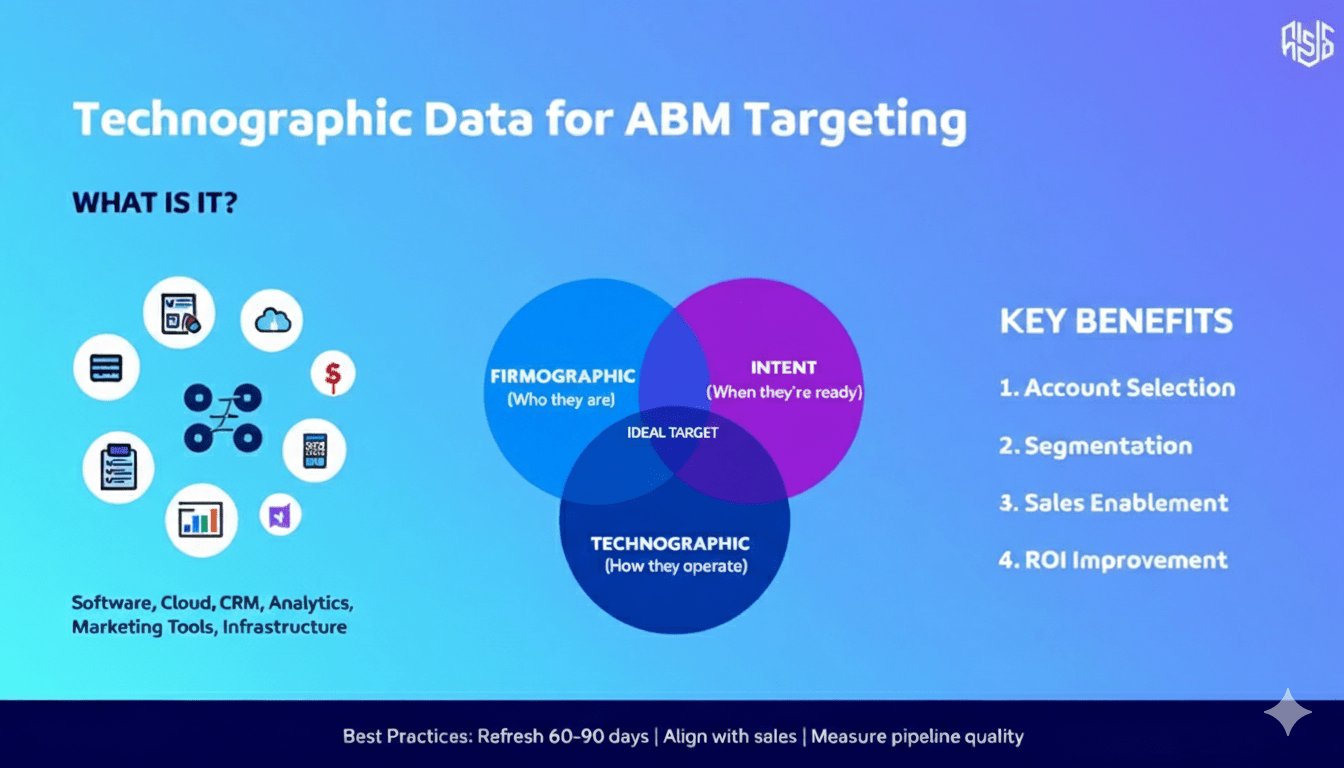
Technographic data is information about the technology stack used by a company, including software applications, cloud platforms, CRM systems, marketing tools, analytics platforms, and IT infrastructure.
Unlike firmographic data, which explains who a company is, technographic data explains how a company operates. For ABM teams, this insight helps determine technical compatibility, integration opportunities, and readiness to adopt new solutions. It turns generic account lists into informed targeting strategies.
How Technographic Data Improves Account Selection
Technographic data helps ABM teams prioritize accounts that are more likely to convert by identifying technology fit early in the process.
Instead of targeting every company in a given industry, teams can focus on accounts that:
- Use competitor or alternative tools
- Rely on legacy systems that need replacement
- Already use complementary technologies
- Show signs of digital maturity
This approach reduces wasted effort on accounts that are unlikely to buy and improves overall ABM efficiency.
Using Technographic Data for Account Segmentation
Technographic data allows segmentation based on technology behavior, not just company attributes.
Summary
Accounts can be grouped based on the tools they use and their level of technology maturity.
Expanded Explanation
Common segmentation approaches include:
- Companies using competitor platforms
- Accounts with outdated or legacy tools
- Businesses using technologies that integrate with your solution
- Digitally advanced vs. early-stage tech adopters
Each segment requires a different messaging strategy. This ensures ABM campaigns feel relevant and tailored, rather than broad and generic.
Personalizing ABM Campaigns with Technographic Insights
Technographic data enables meaningful personalization across ABM campaigns.
Summary
You can tailor messaging based on an account’s existing technology stack.
Expanded Explanation
Instead of generic pain points, technographic-driven personalization allows teams to:
- Reference specific tools the account already uses
- Highlight integration or migration benefits
- Address known limitations of current systems
- Align messaging with the account’s technical maturity
This level of personalization builds credibility and increases engagement across email, ads, and sales outreach.
How Sales Teams Benefit from Technographic Data
Technographic data improves sales effectiveness by enabling better-qualified conversations.
Summary
Sales teams use technographic insights to prepare, prioritize, and pitch more effectively.
Expanded Explanation
With access to technographic data, sales teams can:
- Enter calls with knowledge of the prospect’s tech stack
- Ask more relevant discovery questions
- Anticipate objections related to integration or migration
- Identify upsell or cross-sell opportunities
This alignment reduces friction between marketing and sales and improves conversion rates.
Combining Technographic, Firmographic, and Intent Data
Technographic data works best when combined with other data signals.
Summary
The most effective ABM strategies use multiple data layers together.
Expanded Explanation
- Firmographic data defines your ideal customer profile
- Technographic data shows technical fit and readiness
- Intent data signals buying interest and timing
Together, these data types help teams target accounts that are not only a good fit, but also ready and interested.
Common Mistakes When Using Technographic Data
Technographic data alone does not guarantee ABM success.
Summary
Poor execution can limit the value of technographic insights.
Expanded Explanation
Common mistakes include:
- Treating technographic data as static instead of dynamic
- Over-prioritizing a single technology signal
- Using outdated or inaccurate data
- Failing to align messaging with sales teams
To avoid these issues, technographic data should be refreshed regularly and used as part of a broader ABM strategy.
Best Practices for Using Technographic Data in ABM
Following best practices ensures technographic data drives real results.
Summary
Effective use requires accuracy, alignment, and clear strategy.
Expanded Explanation
Best practices include:
- Keeping technographic data up to date
- Aligning segmentation logic with sales teams
- Using insights to guide messaging, not replace strategy
- Measuring success by pipeline quality, not lead volume
To maximize these practices, partnering with a trusted technographic data provider ensures your ABM strategy is built on accurate, refreshed insights. When implemented correctly, technographic data becomes a revenue enabler, not just a targeting filter.
FAQs
Technographic data describes the software, tools, and platforms a company uses. In ABM, it helps identify technical fit, integration compatibility, and whether an account is ready to adopt or replace a solution.
Technographic data improves ABM targeting by identifying accounts that use relevant, competing, or outdated technologies, allowing teams to prioritize technically aligned accounts and reduce wasted outreach.
Technographic data does not replace firmographic data. Firmographic data defines the ideal account profile, while technographic data shows technical readiness and solution compatibility within those accounts.
Yes. Technographic data enables ABM personalization by aligning messaging with the specific technologies an account already uses, making outreach more relevant, credible, and context-aware.
Technographic data should be refreshed every 60 to 90 days to reflect changes in technology stacks and ensure ABM targeting and personalization remain accurate.
Yes. Sales teams use technographic data to understand a prospect’s technology environment, ask more relevant discovery questions, and address integration or migration concerns early in the sales process.
Yes. Combining technographic data with intent data identifies accounts that are technically suitable and actively researching solutions, which improves ABM engagement and conversion efficiency.
Common mistakes include using outdated datasets, relying on a single technology signal, and failing to align technographic insights with sales and ABM messaging strategies.
Yes. Technographic data is especially useful for small ABM programs because it focuses limited resources on high-fit accounts with higher conversion potential.
Technographic data improves ABM ROI by increasing targeting accuracy, relevance, and sales efficiency, resulting in higher-quality pipeline and shorter sales cycles.

Final Thoughts
Technographic data transforms ABM from broad account targeting into precision-driven engagement. By understanding the technologies your target accounts use, you can personalize outreach, improve sales conversations, and focus resources where they matter most.
For B2B companies focused on pipeline efficiency and predictable growth, technographic data is no longer optional—it is essential.
Suraj Dhas | January 22, 2025
Our Latest Bolgs
Technographic Data for ABM Targeting
Technographic Data How to Use Technographic Data for ABM Targeting Key Takeaways Technographic data helps ABM teams target accounts based on actual

Why Traditional B2B Lead Generation Produces Low-Quality Leads
Lead Generation Why 73% of B2B Marketing Budgets Are Wasted on Low-Quality Leads Nearly 73% of B2B marketing budgets are wasted on

Why Traditional Demand Generation Will Fail in 2026
Demand Generation Top Demand Generation Mistakes to Avoid in 2026 Demand Generation Mistakes are becoming more costly as buyer behavior evolves and


